 Listicle
Easy Plants for Beginner Gardeners: A Texas Starter Guide
Last Updated: November 24, 2026
Quick Summary
The easiest plants for beginner gardeners Texas can start with are cherry tomatoes, okra, peppers, lettuce, spinach, and Swiss chard, plus zinnias and sunflowers for full sun. Pick plants that forgive mistakes: heat tolerant, drought tolerant once established, disease resistant, and low fuss. Match the plant to your region and planting season before you plant anything.
- An easy Texas plant is heat tolerant, drought tolerant, disease resistant, and needs little pruning.
- Cherry tomatoes are the most forgiving tomato type, with Sun Gold and Better Boy often recommended.
- Cool-season crops like lettuce and spinach go in earlier than most beginners expect, often February.
- Fall gardens often outperform spring ones in Texas because plants mature as temperatures drop.
- Start with two or three easy crops, not ten, and choose a spot with six or more hours of sun.
Table of Contents
- Start Small: What Makes a Plant Easy in Texas
- Easy Vegetables to Grow in Texas
- Easy Plants for Full Sun in Texas
- Easy Plants for Pots in Texas
- Your Texas Vegetable Planting Calendar
- Regional Differences: North, Central and East Texas
- Common Beginner Problems and How to Fix Them
- Picking Your First Plants at Hoppy Farms
- Frequently Asked Questions
Start Small: What Makes a Plant Easy in Texas
The most important rule for easy plants for beginner gardeners Texas can offer is simple: pick plants that forgive mistakes.
At Hoppy Farms Neighborhood Nurseries in Bonham, we welcome new gardeners who want to grow something without turning it into a second job. Our advice starts with choosing plants that suit the Texas climate.
An easy plant in Texas usually shares four traits:
- Heat tolerance for long, hot summers
- Drought tolerance once established
- Disease resistance, so one wet week doesn't wipe it out
- Low pruning or fuss through the season
Get those four right and even a first-time backyard garden can produce a harvest. Texas A&M AgriLife Extension's home vegetable gardening guide makes the same point: match the plant to your conditions before you plant anything.
Easy Vegetables to Grow in Texas
The easiest vegetables to grow in Texas are cherry tomatoes, okra, peppers, lettuce, spinach, and Swiss chard. These crops handle Texas weather well and give beginners a real harvest without demanding expert-level care. Here is how the two seasons split.
Warm-Season Crops: Tomatoes, Okra and Peppers
Warm-season crops go in after the last frost and thrive through summer heat. Cherry tomatoes are the most forgiving tomato type, and varieties like Sun Gold and Better Boy earn repeated beginner recommendations. Okra loves Texas heat and keeps producing when other plants quit. Peppers, including bell and jalapeño types, grow well in pots and beds alike.
Give these crops full sun, steady watering, and room to breathe. A common mistake is planting too early: wait until nights stay warm, or a late cold snap will set you back weeks.
Cool-Season Crops: Lettuce, Spinach and Greens
Cool-season crops grow best in spring and fall, when Texas temperatures sit in the mild range. Lettuce, spinach, kale, and Swiss chard are fast-growing vegetables that mature in weeks, not months. Beets, turnips, broccoli, cabbage, and cauliflower also suit the cool season.
Watch out: lettuce and spinach bolt and turn bitter once heat arrives, so plant them early in spring or wait for fall.
Easy Plants for Full Sun in Texas
The best easy plants for full sun in Texas are heat-tolerant perennials and drought-tolerant natives that shrug off six or more hours of direct sun. Zinnias and sunflowers grow from seed in a single season and bloom through the heat.
For beginners, we suggest starting with zinnias and sunflowers. They germinate fast, tolerate poor soil, and give you flowers to cut within a couple of months.
Full sun in Texas means afternoon sun can be intense in July and August, so some plants may benefit from a little shade late in the day.
Easy Plants for Pots in Texas
The easiest plants for pots in Texas are herbs, cherry tomatoes, and peppers, because containers let you control soil, drainage, and sun exposure.
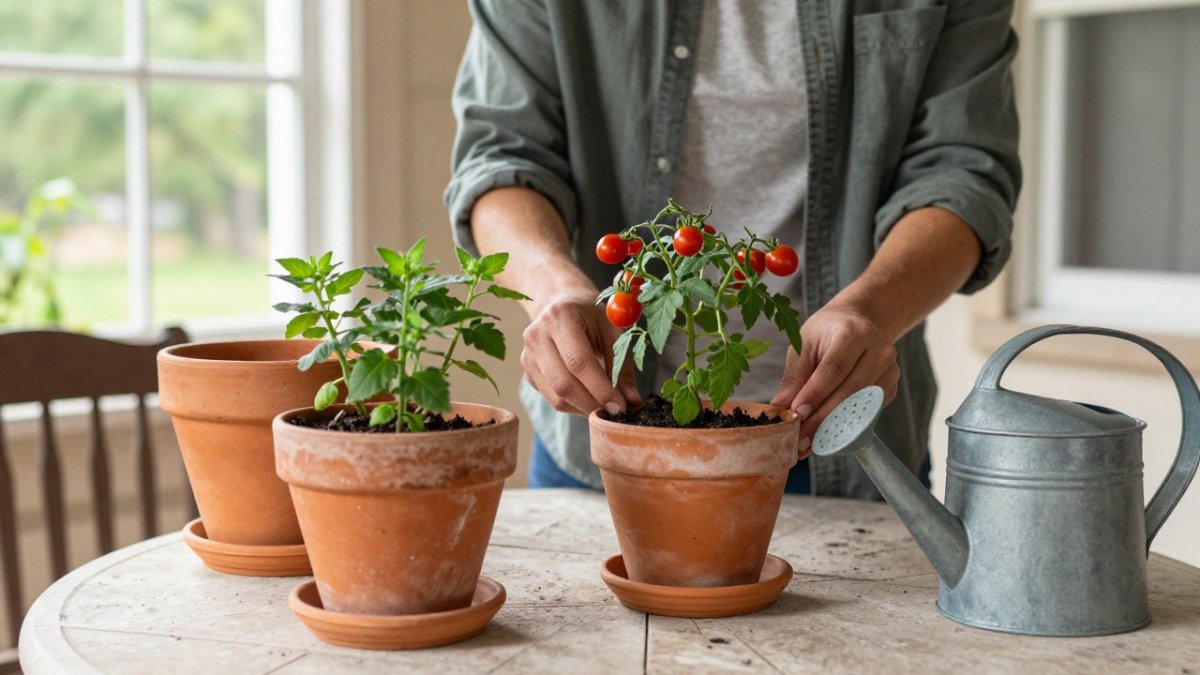
Container gardening solves two beginner problems at once. You skip the clay soil issue entirely, and you can move pots out of harsh afternoon sun. Basil, cilantro, parsley, and mint all grow well in pots; keep mint in its own container, since it spreads aggressively.
Your Texas Vegetable Planting Calendar
Timing matters more than almost anything else in Texas gardening, and a simple planting calendar keeps beginners on track. Texas has two reliable growing seasons, a spring season that ends when summer heat arrives and a fall season that runs from late summer into the first frost, plus a short window for heat-loving crops in between.
| Month | What to Sow or Transplant | Notes for Beginners |
|---|---|---|
| January | Onion sets, bare-root fruit trees and roses | Prep beds and amend soil with compost while it is cool |
| February | Lettuce, spinach, kale, beets, carrots, broccoli, cabbage, cauliflower | Cool-season crops go in earlier than most beginners expect |
| March | Tomatoes, peppers, cucumbers, squash, beans, zinnias, sunflowers | Wait until nights stay warm; watch for a late cold snap |
| April | Okra, sweet potatoes, melons, basil, lantana | Heat-lovers go in once soil is warm |
| May | Okra, sweet potatoes, heat-tolerant herbs, ornamental grasses | Mulch to hold moisture through summer |
| June | Heat-tolerant herbs, southern peas | Keep new plants watered deeply and less often |
| July | Start fall tomatoes and peppers indoors | Plan the fall garden while summer heat peaks |
| August | Fall tomatoes, peppers, squash, cucumbers | Transplant fall warm-season crops late in the month |
| September | Lettuce, spinach, chard, turnips, cilantro, beets, carrots | Fall gardens often outperform spring ones in Texas |
| October | Lettuce, spinach, kale, radishes, garlic | Cool-season crops mature as temperatures drop |
| November | Garlic, onion sets, cover crops | Protect tender plants from early frost |
| December | Dormant fruit trees, roses, cool-season greens | Use the slow season to plan next year's beds |
Two rules keep this calendar honest. First, cool-season crops go in earlier than most beginners expect, February, not April, for lettuce and spinach in much of the state. Second, fall gardens often outperform spring ones in Texas, because plants mature as temperatures drop instead of rising. If you garden in North Texas, our guide to planting a fall garden in North Texas walks through the timing in more detail.
Watch out: this calendar is a general guide for the state. North Texas has a shorter warm season and earlier frost, so shift spring planting later and fall planting earlier; Central and South Texas run hotter and can start warm-season crops sooner.
Regional Differences: North, Central and East Texas
Texas gardening advice changes depending on where you live, and the differences are big enough to matter. North Texas has colder winters and heavier clay soil, Central Texas runs hotter and drier, and East Texas gets more rain and acidic, sandy soil. What works in one region can fail in another. A plant that thrives in East Texas humidity may struggle in dry Central Texas. North Texas gardeners also face a shorter warm season, which pushes cool-season planting later in fall and warm-season planting later in spring.
Here is a region-by-region starting list for beginners, organized by what each region's climate actually favors.
North Texas
North Texas has colder winters, heavier clay soil, and a shorter warm season. Beginners do well with:
- Vegetables: cherry tomatoes, peppers, okra, lettuce, spinach, kale, beets, broccoli
- Herbs: rosemary, oregano, parsley, cilantro
- Ornamentals: zinnias, sunflowers, lantana, ornamental grasses
Amend clay soil with compost before planting, and wait until nights stay warm before setting out tomatoes and peppers.
Central Texas
Central Texas runs hotter and drier, with thin soils and intense summer sun. Beginners do well with:
- Vegetables: okra, peppers, cherry tomatoes, sweet potatoes, southern peas, Swiss chard
- Herbs: rosemary, oregano, thyme, basil
- Ornamentals: Texas sage, lantana, zinnias, ornamental grasses
Choose drought-tolerant plants and mulch heavily; afternoon shade helps in July and August.
East Texas
East Texas gets more rain and acidic, sandy soil, which suits different plants than the rest of the state. Beginners do well with:
- Vegetables: tomatoes, peppers, cucumbers, squash, beans, lettuce, spinach
- Herbs: basil, parsley, cilantro, mint (keep mint in its own container)
- Ornamentals: lantana, zinnias, sunflowers, native pollinator plants
Watch out: heavy rain and humidity can bring disease, so choose disease-resistant varieties and give plants room to breathe.
The takeaway for beginner gardeners: buy plants suited to your specific region, not just to "Texas" in general. Ask at a local nursery before you commit to a variety. For local conditions in our corner of the state, our North Texas gardening zone guide breaks down what to expect.
Common Beginner Problems and How to Fix Them
Most beginner garden failures come down to four fixable problems: too much or too little water, poor soil, too little sun, and planting at the wrong time.
- Watering: New plants need consistent moisture, but soggy soil rots roots. Water deeply and less often.
- Soil: Texas clay drains poorly and compacts hard. Amend beds with compost before planting.
- Sunlight: Track your yard's sun through a full day before choosing a spot.
- Timing: Plant cool-season crops early and warm-season crops after frost risk passes.
Soil is the problem we see most. If your beds hold water after rain or crack when dry, our guide to improving clay soil in your Texas garden covers the practical fixes. Watch out: adding sand to clay makes it harder, not better, so use organic matter instead.
Picking Your First Plants at Hoppy Farms
The fastest way to succeed as a new gardener is to start with healthy transplants and local advice. At Hoppy Farms Neighborhood Nurseries in Bonham, our team is glad to help beginners think through which plants may suit their first season.
Here is how we would start:
- Pick two or three easy crops, not ten.
- Choose a spot with six or more hours of sun.
- Buy healthy transplants for tomatoes and peppers; start lettuce and radishes from seed.
- Water deeply, then let the top inch of soil dry before watering again.
If you want help narrowing it down, our guide to picking plants that thrive locally in Bonham, Texas is a good next read. Families just getting started can also browse our five best native Texas plants for beginners for low-effort options beyond vegetables.
Starting a first garden in Texas is less about skill and more about choosing plants that do the hard work for you. Hoppy Farms Neighborhood Nurseries can help you think through plants and supplies for getting your first garden started in Bonham.
Frequently Asked Questions
What are the easiest plants to grow in Texas for beginners?
Start with crops that tolerate heat and need little fuss: cherry tomatoes, okra, peppers, cucumbers and squash in warm weather, and lettuce, spinach, Swiss chard, beets and kale in cooler months. Herbs like basil, parsley and cilantro are forgiving too. Pick two or three of these crops rather than planting everything at once.
Which easy plants for pots in Texas should a new gardener try?
Cherry tomatoes, peppers, lettuce, herbs and zinnias all do well in containers. Use a pot with drainage holes and a good potting mix rather than garden soil, which compacts in pots. In Texas heat, containers dry out faster than beds, so check the soil daily in summer and water when the top inch feels dry. A pot on a sunny patio is a low-risk way to learn before you commit to a raised bed.
When should beginners plant vegetables in Texas?
Texas has two main growing seasons, so timing depends on the crop. Warm-season vegetables like tomatoes, peppers, okra and squash go in after the last frost in spring, and again in late summer for a fall harvest. Cool-season crops such as lettuce, spinach, broccoli and cabbage are planted in fall and late winter. Use a Texas vegetable planting calendar for your region, since North Texas dates run later than Central and East Texas.
What easy plants for full sun in Texas can handle the heat?
Okra, peppers, eggplant, sunflowers and zinnias take full Texas sun without wilting. Many herbs, including rosemary and basil, also prefer it. The main job is watering: full-sun plants in summer need deep, regular watering, ideally early morning, and a layer of mulch to hold moisture in the soil. If a plant looks stressed in afternoon sun, shade cloth or a spot with morning sun only can help it recover.
What plants grow well in North Texas gardens?
North Texas gardeners in the Bonham area can grow most of the same crops as the rest of the state, but planting dates shift later in spring and earlier in fall because of the shorter warm season. Tomatoes, peppers, okra, cucumbers, squash, lettuce and spinach all perform well. Local advice matters here: a nursery familiar with your area's soil and frost dates can help you choose varieties and timing for your yard.