 listicle
5 Best Native Texas Plants for Beginners to Grow
Last Updated: November 10, 2026
Quick Summary
The five best native Texas plants for beginners are Blackfoot Daisy, Mealy Blue Sage, Indian Blanket, Autumn Sage, and Texas Sage. Each tolerates drought, accepts lean soil, and recovers from the mistakes new gardeners make most often. Match the plant to your dirt and sun before you buy.
- Run four checks before buying: sun exposure, drainage, soil conditions, and space at maturity.
- Fall planting from late September through November gives roots a full cool season.
- Water new transplants deeply and infrequently, not with daily sips.
- Afternoon wilting is normal, but wilting that persists into morning means roots stay too wet.
- None of these five plants survive a spot that stays wet after rain.
Table of Contents
- How to Pick Native Texas Plants That Survive Your First Year
- The Four Checks Beginners Should Run Before Buying
- Quick Comparison: The Top Five at a Glance
- 1. Blackfoot Daisy: The Front-Yard Workhorse
- 2. Mealy Blue Sage: Blooms and Hummingbirds in One Plant
- 3. Indian Blanket: Native Wildflowers That Come Back Year After Year
- 4. Autumn Sage: Color That Lasts Through the Heat
- 5. Texas Sage: A Shrub That Handles Neglect
- Low-Maintenance Texas Native Plants: What Low-Maintenance Really Means
- Frequently Asked Questions
How to Pick Native Texas Plants That Survive Your First Year
The five best native Texas plants for beginners are Blackfoot Daisy, Mealy Blue Sage, Indian Blanket, Autumn Sage, and Texas Sage. Each one tolerates drought, accepts lean soil, and recovers from the mistakes new gardeners make most often.
Beginner success comes down to matching the plant to your dirt and sun, not your effort level.
Below are four quick checks to run before you buy, then each plant's light needs, water needs, bloom time, and North Texas quirks.
Native Texas plants are species that evolved in this state's soils and climate and need no supplemental irrigation once established.
The Four Checks Beginners Should Run Before Buying
Skip the plant tag and run these four checks first. They take ten minutes and prevent the most common first-year failure: a plant doomed by its location, not its care.
- Sun exposure. Watch your spot across a full day. Full sun means six or more hours of direct light; partial shade means filtered light or morning sun only. A full-sun plant will sulk and stop blooming in four hours of shade.
- Drainage. Dig a hole about 30 cm deep, fill it with water, and time how long it drains. Water still sitting after several hours means clay, which changes what you can grow.
- Soil conditions. North Texas soils vary block by block, from dense black clay to sandy loam. Most plants below accept poor, rocky, or lean soil but almost none tolerate standing water.
For a deeper reference on which species suit your exact area, the Native Plant Society of Texas native plant database lets you search by region and growing conditions before you ever leave the house.
Quick Comparison: The Top Five at a Glance
Here is the short version. All five are drought tolerant and low maintenance once established, but they differ in sun tolerance, size, and what they bring to the yard.
| Plant | Sun | Water Once Established | Mature Size | Bloom Time & Color | Best For |
|---|---|---|---|---|---|
| Blackfoot Daisy | Full sun | Very low | Low mound, spreads slowly | Spring to fall, white with yellow centers | Front borders, hot pavement edges |
| Mealy Blue Sage | Full sun to partial shade | Low | Upright clump, roughly waist high | Spring through fall, blue-purple | Pollinator and hummingbird gardens |
| Indian Blanket | Full sun | Very low | Low wildflower, self-seeds | Late spring to summer, red-orange | Wildflower meadows, seeding bare ground |
| Autumn Sage | Full sun to partial shade | Low | Compact shrub, knee to waist high | Spring to first frost, red, pink, or coral | Long color season, patio beds |
| Texas Sage | Full sun | Very low | Medium to large shrub | Summer, silvery foliage with pink-purple flowers | Hedges, neglected corners, privacy |
Best for: beginners who want one dependable plant per role: a border filler, a pollinator draw, a wildflower, a long bloomer, and a shrub.
Skip if: your spot stays wet after rain. None of these five will forgive poor drainage, and that is the one condition worth fixing before you plant.
When and How to Plant Each One
Timing matters more than technique. Fall planting, late September through November in most of Texas, gives roots a full cool season before the first summer. Spring planting works, but you will water more through July and August.
- Blackfoot Daisy: plant from a nursery pot in fall or early spring. Set the crown slightly above grade on a small mound in clay. Space 45-60 cm apart; they spread slowly but widen over two to three seasons.
- Mealy Blue Sage: plant in fall or spring, 45-60 cm apart. It tolerates lean soil, so skip compost unless your soil is pure sand. Water at planting, then let the surface dry between waterings.
- Indian Blanket: sow seed in fall or early winter, lightly raked into bare ground and kept moist until germination. Do not bury it deeply, it needs light. Expect a modest first spring and a fuller second year.
First-Year Watering: The Schedule Beginners Get Wrong
The most common first-year failure is overwatering, not underwatering. New native transplants need deep, infrequent watering, not daily sips.
- Weeks 1-2: water at planting, then every 3-4 days, soaking the root ball.
- Weeks 3-8: stretch to every 5-7 days if there is no rain.
- Months 3-12: water every 10-14 days through the first summer, then taper to rainfall only in a normal year.
Afternoon wilting is normal for a new transplant in heat; wilting that persists into morning usually means roots stay too wet, not too dry. Check the soil 5 cm down before watering.
Soil, Drainage, and Establishment Troubleshooting
- Heavy clay: plant on a slight mound and amend only the planting hole, not the whole bed. Blackfoot Daisy and Texas Sage are least forgiving of wet clay; Mealy Blue Sage and Autumn Sage handle it better with improved drainage.
- Sandy or rocky soil: all five perform well, but Indian Blanket and Blackfoot Daisy are most at home. Water more often the first season because sand drains fast.
- Standing water after rain: fix the drainage or choose another spot. None of these five survive a wet winter in a low corner.
A Quick Regional Note
Texas is not one climate, and the same five plants behave differently across the state. In North and Central Texas, fall planting and clay-tolerant placement matter most. In South Texas, plant in fall and expect Texas Sage and Mealy Blue Sage to bloom nearly year-round in mild winters. In West Texas, all five thrive on lean, rocky ground, but Indian Blanket and Blackfoot Daisy are the most reliable from seed. If you are unsure which of the five suits your county, the Native Plant Society of Texas native plant database lets you search by region before you buy.
1. Blackfoot Daisy: The Front-Yard Workhorse
Blackfoot Daisy earns the top spot because it blooms through heat that shuts other plants down.
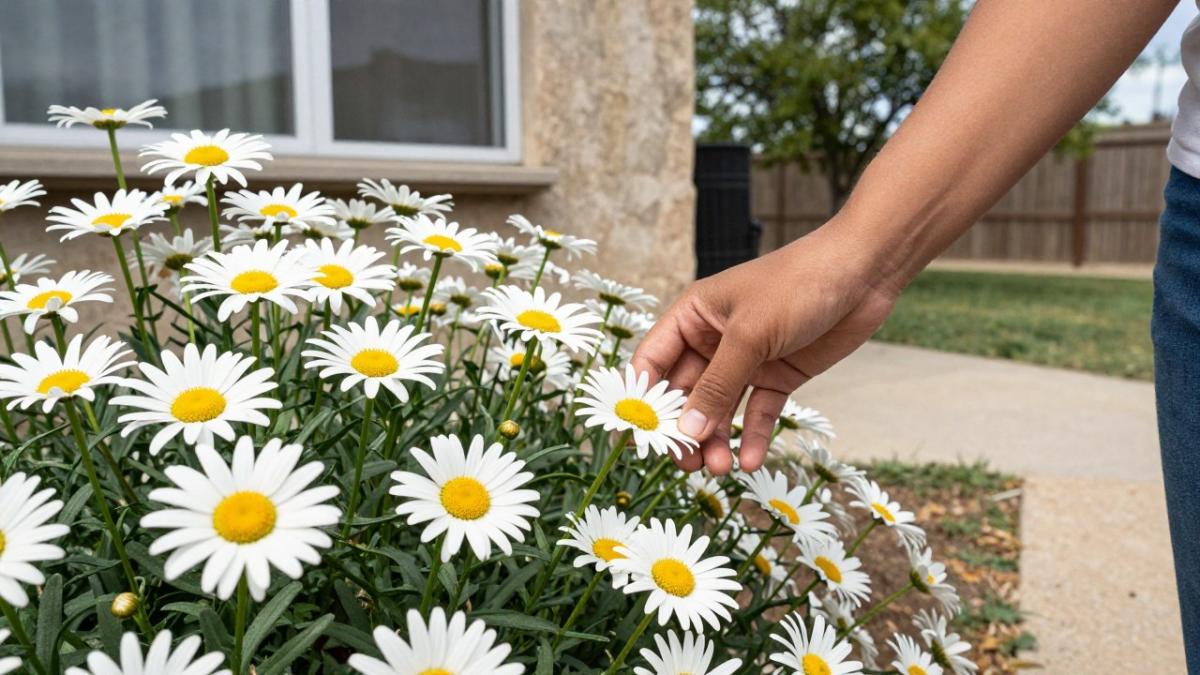
Best for: the strip between a sidewalk and a street, where reflected heat and dry soil kill most bedding plants.
Skip if: you garden in heavy clay that holds water.
A common mistake is overwatering in the first month. New gardeners see a wilting transplant and reach for the hose daily.
2. Mealy Blue Sage: Blooms and Hummingbirds in One Plant
Mealy Blue Sage delivers two things beginners want at once: steady blue-purple blooms and a yard full of hummingbirds and pollinators. Spikes appear from spring into fall, and it tolerates full sun and partial shade, making it forgiving about placement.
Best for: a bed you can watch from a window, since hummingbirds work the flowers constantly.
Skip if: you want a formal, clipped look. This sage flops and sprawls a little, and shearing it hard in summer costs you blooms.
3. Indian Blanket: Native Wildflowers That Come Back Year After Year
Indian Blanket is the wildflower entry and the closest thing to a self-replacing planting a beginner can buy.
Best for: bare, sunny ground where you want color with no irrigation, including slopes and roadside strips.
Skip if: you demand a manicured border. Indian Blanket wanders, and seedlings will appear where you did not plan them.
Plant it from seed in fall or early winter so cold and rain do the stratification work.
4. Autumn Sage: Color That Lasts Through the Heat
Autumn Sage, despite the name, blooms from spring until the first frost, making it the longest-performing plant on this list.
Best for: gardeners who want repeat color and a plant that feeds hummingbirds from early summer into fall.
Skip if: you garden in deep shade. Flowering drops off sharply without at least a half day of sun.
Lightly tip-prune after each bloom flush to encourage the next one.
5. Texas Sage: A Shrub That Handles Neglect
Texas Sage closes the list with the plant we recommend to the most forgetful gardeners. Silvery foliage and pink-purple summer flowers make it a genuine landscape shrub, and it thrives in full sun on lean, rocky, well-drained ground.
Best for: hedges, privacy screens, and the hot corner of the yard nobody wants to water.
Skip if: you want fast growth or you garden in shade or wet soil. Texas Sage is slow, and it resents both.
Low-Maintenance Texas Native Plants: What Low-Maintenance Really Means
Low-maintenance Texas native plants are not no-maintenance plants, and the distinction matters most in year one. Expect to water new transplants through their first summer, pull weeds, and resist fertilizer. After that, most survive on rainfall alone in a normal year, but "normal" varies across Texas.
What Makes a Plant Beginner-Friendly
Five traits separate a plant a beginner can succeed with from one that will fail despite good care:
- Low water once established. All five survive on rainfall in a normal year.
- Tolerance of lean, rocky, or clay soil. None need rich garden soil.
- Resilience to heat and drought. They bloom through Texas summer rather than shutting down.
Regional and Ecoregion Guidance
Texas spans several ecoregions, and the same plant can be a breeze in one and a struggle in another. A few practical patterns:
- North and Central Texas (Blackland Prairie, Cross Timbers): clay soils dominate. Plant on slight mounds, choose fall planting, and lean on Mealy Blue Sage and Autumn Sage where drainage is imperfect. Blackfoot Daisy and Texas Sage need the best-drained spots.
- South Texas (Rio Grande Plains): mild winters let Mealy Blue Sage and Texas Sage bloom nearly year-round. Plant in fall so roots establish before the first hot, dry spring.
- West Texas (Trans-Pecos, High Plains): lean, rocky, alkaline ground suits all five. Indian Blanket and Blackfoot Daisy are most reliable from seed; Texas Sage is the best shrub for wind and neglect.
Establishment Troubleshooting
- Plant fails to establish in clay: the planting hole is holding water. Dig wider, plant on a mound, and do not amend the whole bed.
- Leaves yellow and drop in the first month: usually overwatering. Let the soil dry 5 cm down before watering again.
- No blooms in year one: normal for Indian Blanket from seed and common for Texas Sage. Roots come first; flowers follow.
Watch out: the most common beginner mistake is treating a native like a bedding annual, daily watering and fertilizer. That combination kills more of these five plants than drought does.
If you want a searchable shortlist by location, a native plant finder by ZIP code helps narrow species to your county before you shop. Our team at Hoppy Farms Neighborhood Nurseries can walk you through which of these five suits your specific yard, and our Texas A&M AgriLife Extension gardening guidance is a solid free reference for planting dates and soil prep.
Your first native bed does not need to be big or expensive. It needs the right five plants in the right four conditions, and a little patience through the first summer.
Frequently Asked Questions
What are the easiest native Texas plants to care for?
Blackfoot Daisy, Mealy Blue Sage, Indian Blanket, Autumn Sage and Texas Sage are among the easiest. All five handle heat and sun well, need little beyond occasional watering once established, and suit beginners who want a low-maintenance Texas garden. Blackfoot Daisy and Indian Blanket work well in flower beds, while Texas Sage makes a tough shrub for hot, dry corners. Check each plant's sun and soil needs before buying, and ask your nursery which ones match your specific yard.
How often should you water newly planted native Texas plants?
New plants need regular watering while their roots establish, usually through the first growing season. Water deeply when the top inch of soil feels dry rather than giving light daily sprinkles, which encourage shallow roots. Once established, most of these plants need far less water and rely on rainfall in a normal year. During long dry spells, a deep soak every couple of weeks keeps them healthy. Well-drained soil matters as much as watering frequency, since soggy roots kill more natives than drought does.
Which Texas native plants thrive in full sun?
Blackfoot Daisy, Mealy Blue Sage, Indian Blanket, Autumn Sage and Texas Sage all take full sun and bloom or grow best with six or more hours of direct light daily. In the hottest parts of the state, a little afternoon shade helps Blackfoot Daisy and Autumn Sage hold up. Full sun also reduces disease and keeps these plants compact. If your yard bakes all day, Texas Sage and Indian Blanket are the most forgiving choices for the brightest spots.
How do I choose native plants for my Texas yard?
Start with your light and soil. Check how many hours of sun each spot gets and whether water drains away or pools. Then match plants to those conditions rather than trying to change the yard. Look for plants labeled for North Texas if you garden around Bonham. Buy from a local nursery that can tell you how each plant performs in your area, and start with three to five plants rather than a whole landscape at once.
