 Listicle
Best Plants for North Texas Clay Soil That Actually Thrive
Last Updated: October 26, 2026
Quick Summary
The best plants for North Texas clay soil are natives that evolved in Blackland Prairie gumbo, including Texas Red Oak, Live Oak, Yaupon Holly, Autumn Sage, Buffalograss, and sedges. Pick species that tolerate clay rather than replacing the soil, and amend the backfill lightly with roughly one part compost to three parts soil. Plant at the right depth and keep the root flare above grade.
- Dig the planting hole no deeper than the root ball and two to three times as wide.
- Mix backfill at roughly one part compost to three parts native soil, never straight potting mix.
- Skip sand, which turns gumbo into a concrete-like blend, and avoid heavy tilling.
- Water deeply two to three times per week for the first month, then once per week through the first summer.
- Fall and early spring are the best planting windows in North Texas.
Table of Contents
- Why North Texas Clay Soil Is Tough and What Grows Anyway
- Quick Comparison: Best Plants for North Texas Clay Soil
- Native Plants for Blackland Prairie Clay
- How to Improve Clay Soil Garden Texas: Preparation Without Over-Amending
- Amendments for North Texas Clay Soil: What to Add and What to Skip
- Trees and Shrubs for Clay Landscapes: Texas Red Oak, Live Oak, Yaupon Holly, and Junipers
- Perennials, Groundcovers, and Grasses for Sun and Partial Shade
- Planting and Care After Planting: Watering, Mulch, and Establishment
- Frequently Asked Questions
Why North Texas Clay Soil Is Tough and What Grows Anyway
Black gumbo is the reason so many North Texas gardeners give up.
Here's the part most guides get wrong: you don't fix North Texas clay soil by digging a big hole and filling it with potting mix. That creates a bathtub.
The list below is organized by what actually grows in Blackland Prairie clay and nearby black gumbo, sorted by site conditions.
Quick Comparison: Best Plants for North Texas Clay Soil
| Plant | Type | Light | Drainage Needs | Best For |
|---|---|---|---|---|
| Texas Red Oak | Shade tree | Full sun | Tolerates clay | Large yards, long-term shade |
| Live Oak | Evergreen tree | Full sun | Tolerates clay | Screening, windbreak |
| Yaupon Holly | Evergreen shrub | Sun to partial shade | Adaptable | Hedges, privacy |
| Sky Rocket Juniper | Upright evergreen | Full sun | Well to moderate | Narrow spaces, vertical accent |
| Autumn Sage | Perennial | Full sun | Sharp drainage | Borders, pollinators |
| Buffalograss | Native grass | Full sun | Compacted clay | Low-water lawns |
| Sedges | Grass-like | Sun to partial shade | Moist to average | Wet spots, rain gardens |
This table is the shortcut. The rest of the article explains why each plant earns its place and where it falls short.
Native Plants for Blackland Prairie Clay
Native plants for Blackland Prairie clay are the safest bet for a Bonham-area yard because they evolved in this exact soil and climate.
For trees, Texas Red Oak (Quercus buckleyi) and Live Oak (Quercus virginiana) both appear in regional guides to plants for Dallas-area clay.
Native grasses round out the list. Buffalograss is a native turf alternative that tolerates compacted clay better than most lawn grasses. Sedges handle the low, wet spots where fescue dies.
Lady Bird Johnson Wildflower Center native plant database
How to Improve Clay Soil Garden Texas: Preparation Without Over-Amending
The most common mistake is over-amending. Gardeners rototill bags of compost into gumbo, create a fluffy layer, and then watch it settle into a concrete-like crust after the first hard rain. The fix is to work with clay, not against it.
Clay soil preparation without over-amending follows three rules:
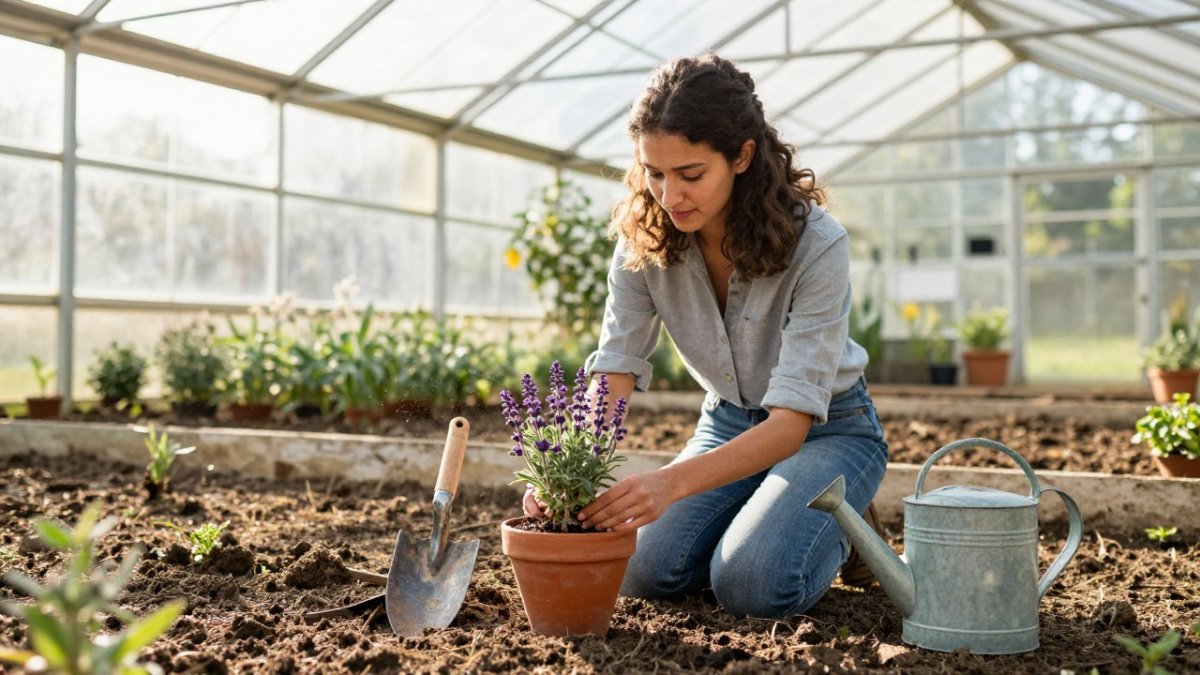
- Plant at the right depth. Dig the hole no deeper than the root ball and two to three times as wide. The wide hole loosens surrounding clay so roots can spread.
- Amend the backfill lightly. Mix native soil with a modest amount of compost, roughly one part compost to three parts soil. Do not fill the hole with straight potting mix.
- Keep the root flare above grade. Planting too deep is the single biggest killer of new trees and shrubs in clay.
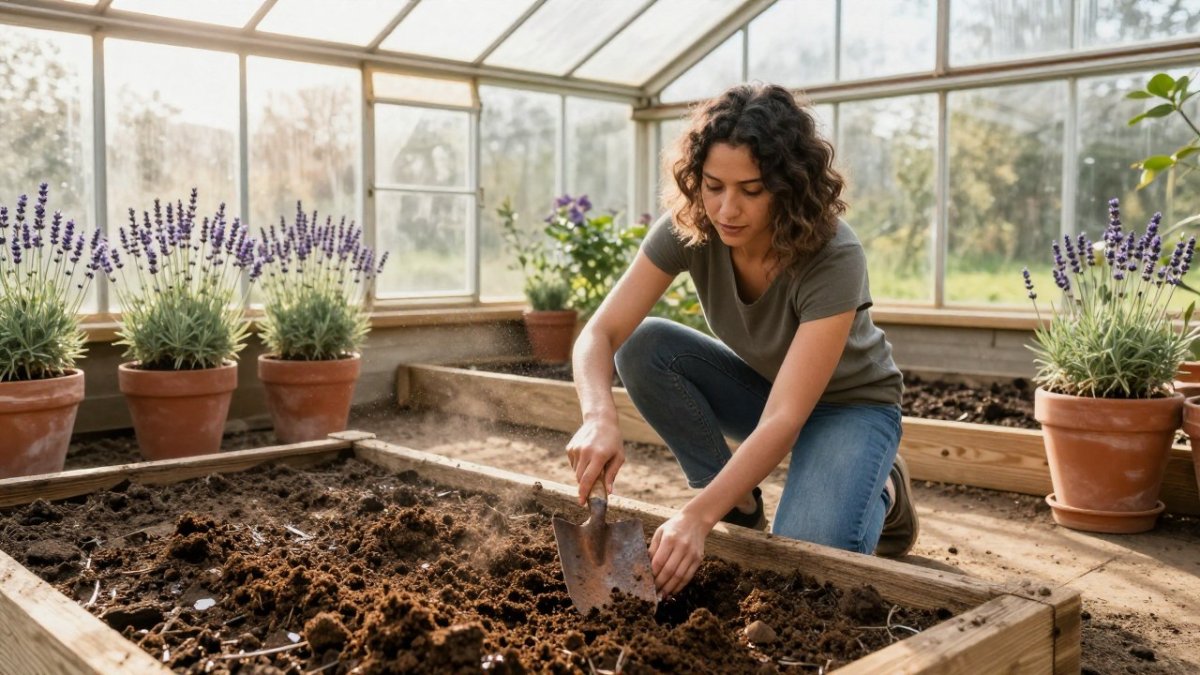
If your soil is severely compacted, aerate the planting area first. A garden fork pushed in and rocked back and forth opens channels without destroying structure.
Amendments for North Texas Clay Soil: What to Add and What to Skip
The right amendments for North Texas clay soil are simple and cheap. The wrong ones waste money and can make drainage worse.
Add these:
- Compost. Well-rotted organic matter improves structure and feeds soil life. It's the one amendment worth buying in bulk.
- Mulch. A 2-3 inch layer of shredded hardwood or pine bark keeps moisture even and moderates soil temperature. Keep it pulled back from trunks.
- Gypsum, in specific cases. Gypsum can help sodic clay, but it is not a universal fix. Test before you spread.
Skip these:
- Sand. Mixing sand into clay creates a concrete-like blend. This is the classic gumbo mistake.
- Heavy tilling. Repeated rototilling destroys the soil structure you're trying to build.
- Deep amendment layers under trees. A shallow, wide amendment beats a deep, narrow one every time.
Trees and Shrubs for Clay Landscapes: Texas Red Oak, Live Oak, Yaupon Holly, and Junipers
Trees and shrubs do the heavy lifting in a clay landscape.
Texas Red Oak is our top pick for a shade tree in clay.
For narrow spaces, Sky Rocket Juniper and Taylor Juniper both deliver a tall, narrow silhouette. Regional plant guides recommend both for Texas heat, clay, and drought.
Yaupon Holly belongs in every native hedge we design. It's evergreen, it takes shearing, and it feeds birds through winter.
Texas A&M AgriLife Extension horticulture resources
Perennials, Groundcovers, and Grasses for Sun and Partial Shade
Most clay-soil plant lists sort by light and stop there. That is not enough in North Texas, because two shady spots can behave completely differently: one may be compacted but workable, the other seasonally waterlogged after every rain. The plants below are grouped by drainage severity first, then by light, so you can match a species to the spot you actually have rather than the spot a generic list assumes.
Compacted but workable clay (dries between rains)
These are the sunny, hard-edged spots where water pools briefly and then runs off. Plants here need to survive both short wet spells and long dry ones.
- Autumn Sage (Salvia greggii): shrubby perennial, roughly 2-3 feet tall and wide, blooms spring through fall in red, pink, or coral. Needs sharp drainage; amend the planting pocket with grit or coarse compost if water stands. Space 24-36 inches apart. Pollinators work it heavily.
- Blackfoot Daisy (Melampodium leucanthum): low mounding perennial, about 1 foot tall and 1-2 feet wide, white daisy-like blooms spring to fall. Demands sharp drainage; plant on a slight mound if your clay is tight.
- Poppy Mallow (Callirhoe species): trailing or upright native, 6-18 inches tall depending on species, wine-red cup flowers in spring. Tolerates clay better than most wildflowers but still wants a raised pocket.
Seasonally waterlogged or poorly drained clay
These are the low spots, the rain-garden edges, and the places where fescue died. Plants here must tolerate wet feet in winter and spring and dry cracks in summer.
- Sedges (Carex species, including Carex texensis and Carex blanda): grass-like natives, 6-12 inches tall, clumping. Tolerate moist to average soil and partial shade. Space 8-12 inches apart for a groundcover effect. Evergreen in mild winters.
- Texas Frogfruit (Phyla nodiflora): creeping groundcover, 3-6 inches tall, spreads 2-3 feet. Tolerates both wet and dry spells; good between stepping stones and at lawn edges. Small white-purple flowers spring to fall.
- Inland Sea Oats (Chasmanthium latifolium): clumping grass, 2-3 feet tall, drooping oat-like seed heads in late summer. Best in partial to full shade with average to moist soil. Self-sows readily; remove seed heads if you don't want spread.
Sun, compacted clay (lawn and meadow substitutes)
- Buffalograss (Bouteloua dactyloides): native turf grass, 4-6 inches tall, spreads by stolons. Best for low-traffic lawns; needs full sun and does not tolerate shade. Plant plugs 12-18 inches apart; water deeply until established, then sparingly.
- Indian Grass (Sorghastrum nutans): clumping ornamental grass, 3-5 feet tall, golden fall color. Tolerates clay and drought; space 18-24 inches apart.
- Little Bluestem (Schizachyrium scoparium): clumping grass, 2-3 feet tall, blue-green summer foliage and rust-red fall color. Tolerates compacted clay and dry spells; space 12-18 inches apart.
Lady Bird Johnson Wildflower Center native plant database
USDA Natural Resources Conservation Service plant guides
Planting and Care After Planting: Watering, Mulch, and Establishment
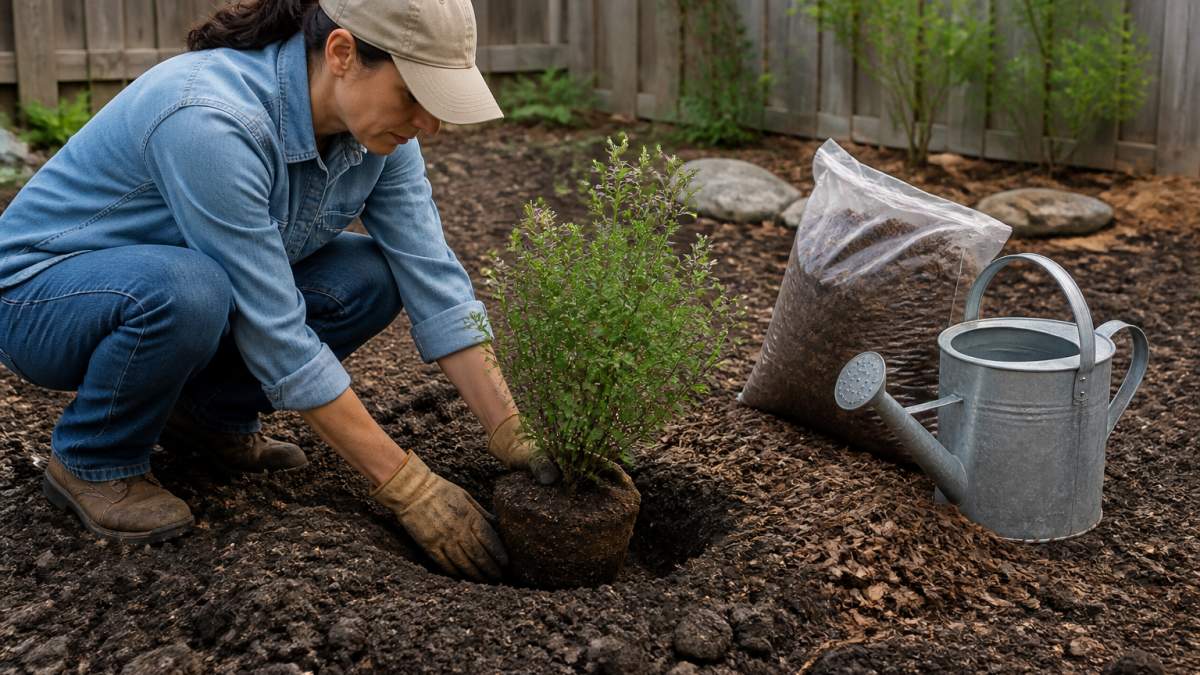
Most plant lists end at the nursery tag. The first year is where clay-soil plantings actually succeed or fail, and the routine is more specific than "water deeply." Below is general advice for planting a native shrub or tree.
Watering by establishment stage
The goal is to train roots downward into the clay, not to keep the surface damp. A common pattern is to water deeply two to three times per week for the first month, then once per week through the first summer, then rely on rainfall and only supplement during drought. Adjust for rainfall and soil type; sandy pockets dry faster than gumbo.
- First two weeks: Water at planting, then every two to three days. A slow soak that reaches the root ball is better than a quick sprinkle. For a 5-gallon shrub, roughly 2-3 gallons per watering is a reasonable starting point.
- First month to first summer: Stretch to once per week, still deep. Let the top inch or two of soil dry between waterings.
- After the first year: Most native and clay-tolerant plants on this list survive on rainfall. Water only during extended dry spells, and water deeply when you do.
Mulch: depth, type, and placement
Two to three inches of shredded hardwood or pine bark is the standard. Coarse mulch holds up better than fine mulch in North Texas heat and wind. Pull it back two to three inches from trunks and stems to prevent rot. Reapply in spring as it breaks down; expect to top-dress every year or two.
Spacing and mature size
Spacing depends on the mature spread, not the nursery-pot size. A shrub that will reach 4 feet wide should go in at least 4 feet from its neighbor if you want each plant to keep its shape. For hedges, plant closer, roughly two-thirds of mature width, and plan to shear. Trees need more room than most people give them: a Texas Red Oak can eventually spread 40 feet or more, so site it well away from foundations and driveways.
Pruning and first-year care
Resist pruning in the first year except to remove dead or damaged wood. Let the plant establish roots and canopy before shaping. For perennials like Autumn Sage and Texas Lantana, a late-winter cutback, roughly one-third to one-half of top growth, encourages dense spring flush. Ornamental grasses are best cut back in late winter before new growth emerges.
Planting window
Fall and early spring are the best planting windows in North Texas. Fall gives roots a full cool season to settle before summer heat arrives, and rainfall is usually more reliable. Early spring works if you commit to watering through the first summer.
Texas A&M AgriLife Extension horticulture resources
Frequently Asked Questions
Can I plant straight into North Texas clay soil?
Yes, many native and adapted plants can go directly into clay soil, but the planting hole matters. Dig the hole two to three times wider than the root ball and no deeper than the root ball itself, so roots spread sideways into loosened clay. Do not amend the backfill heavily with compost, because that creates a rich pocket that roots refuse to leave. Choose species with clay tolerance, such as Texas red oak, yaupon holly, autumn sage, or buffalograss, and top-dress with mulch instead of mixing in large amounts of organic matter.
Do native Texas plants perform better in clay soil than non-natives?
Native plants for Blackland Prairie clay generally establish faster and need less long-term watering than non-natives, because they evolved in heavy, alkaline, poorly drained soil. Species like Texas red oak, live oak, yaupon holly, autumn sage, and buffalograss are adapted to local rainfall and heat. That does not mean every native thrives in every spot: drainage and sun exposure still decide survival. Match the plant to the site, and even non-natives with strong clay tolerance can do well.
How do I improve clay soil garden Texas without over-amending?
Improve clay soil garden Texas by working a modest amount of compost into the top few inches, not by filling planting holes with rich amendments. Heavy amendment creates a bathtub effect where water sits in the loose pocket and roots stay shallow. Instead, spread two to four inches of compost over the surface, keep it mulched, and let earthworms and root growth do the mixing. For compacted areas, aerate first and add organic matter gradually over a few seasons rather than all at once.
What are the best amendments for North Texas clay soil?
The most reliable amendments for North Texas clay soil are compost, aged manure, and coarse mulch applied to the surface. Compost improves structure and drainage while feeding soil life. Avoid adding sand to clay, which can create a concrete-like mix, and skip heavy tilling that damages soil structure. Gypsum is sometimes suggested, but it only helps certain sodic soils and is not a general fix. Test your soil first, then amend based on what it actually needs.
What plants thrive in clay soil and tolerate shade in North Texas?
For partial shade in North Texas clay, consider yaupon holly, Texas red oak, and sedges, which handle heavier soil and less direct sun. In deeper shade, live oak can work as a canopy tree, though it needs room to mature. Flowering options are more limited in shade, so rely on foliage plants and groundcovers. Always check drainage in shaded clay spots, since shade slows evaporation and waterlogged soil kills more plants than dry soil does.