 How-to
How to Improve Clay Soil in Your Texas Garden
Table of Contents
- Why Texas Clay Soil Is So Hard to Work With
- Test Before You Amend: Soil Testing and Amendment Rates
- When to Amend Clay Soil in Texas
- Step-by-Step: How to Improve Clay Soil in Your Garden
- The Best Compost for Clay Soil (and How Much to Add)
- Gypsum for Clay Soil: What It Does and When It Won't Help
- Plants That Grow in Texas Clay Soil
- Raised Beds and Drainage Fixes for Problem Sites
- Frequently Asked Questions
Last Updated: October 18, 2026
Why Texas Clay Soil Is So Hard to Work With
Clay soil Texas gardeners battle is dense, sticky, and slow to drain because its tiny particles pack tightly together, leaving little room for air or water movement. That structure is why so many Bonham-area gardeners struggle with plants that rot, dry out, or refuse to grow.
Here is what most guides get wrong: clay is not "bad" soil. It holds nutrients and moisture well. The problem is structure, not fertility.
Blackland Prairie, Houston Clay, and Dallas Clay: What You're Actually Digging Into
Texas has several distinct clay types, and each behaves a little differently:
- Blackland Prairie soil is dark, heavy, and expands and shrinks with moisture. It is common across much of North Texas.
- Houston clay is a dense, gray-to-black gumbo that drains slowly and stays wet far longer than gardeners expect.
- Dallas clay tends to be alkaline and rocky, with a shallow layer of topsoil over hard, compacted subsoil.
Our region sits in the middle of this mix, leaning heavy and alkaline, which is why we tell new gardeners to test before they amend.
Test Before You Amend: Soil Testing and Amendment Rates
A soil test is the difference between guessing and knowing. In Texas clay, it reveals your pH, nutrient levels, and whether you have a sodium problem, three things that change how much compost, sulfur, or gypsum you add.
What a Basic Texas Soil Test Tells You
Most county extension offices and private labs offer a basic soil test for a modest fee. The report usually includes:
- pH, Most Texas clay runs alkaline (above 7.0), which locks up iron, zinc, and phosphorus. If your pH is 8.0 or higher, adding more compost alone won't fix the chlorosis you see on plants.
- Organic matter percentage, Many Texas clay soils test below 2%. Getting to 4-5% is a multi-year project, not a one-season fix.
- Phosphorus and potassium, Clay often holds plenty of both. If your test shows high levels, skip the starter fertilizer and put that money into compost.
How to Take a Sample That Actually Represents Your Bed
A common mistake is digging one scoop from one spot. Clay varies across a yard, especially where cut-and-fill grading leaves different soil types in different corners.
- Use a clean trowel or soil probe. Avoid galvanized tools, which can contaminate the sample with zinc.
- Take 8-10 small cores from different spots, each about 6 inches deep for garden beds or 4 inches for lawns.
- Mix them in a clean plastic bucket. Metal buckets can skew micronutrient results.
- Let the sample air-dry before bagging. Wet soil can ferment in the mail and give false readings.
- Label the bag with your name, bed name, and date. Send about a cup to the lab.
Your county extension office can tell you which labs serve your area and what they charge. In Texas, the Texas A&M AgriLife Extension Service is the standard reference for soil testing and regional soil types.
Amendment Rates: What the Numbers Actually Mean
Amendment rates depend on your test results, but here are practical starting points for Texas clay:
| Test Result | What It Means | What to Add |
|---|---|---|
| Organic matter below 2% | Very low; clay is tight and lifeless | 3-4 inches of compost worked into top 6-8 inches, then top-dress 1-2 inches yearly |
| Organic matter 2-4% | Moderate; structure is improving | 1-2 inches of compost as top dressing twice a year |
| pH above 7.5 | Alkaline; iron and zinc may be locked up | Elemental sulfur to lower pH (follow test recommendations), plus compost |
| pH below 6.0 | Acidic; uncommon in Texas clay but possible | Agricultural lime, only if the test calls for it |
| High sodium | Sodic soil; poor structure and drainage | Gypsum, but only with a test confirming high sodium |
| High phosphorus | No need for more phosphorus | Skip starter fertilizers; add compost and nitrogen sources instead |
A Simple Soil-Test Workflow for Texas Gardeners
- Test before you build a new bed. Know what you are starting with.
- Test again every 2-3 years. Clay changes slowly; annual tests are usually unnecessary unless correcting a specific problem.
- Keep your reports. Comparing tests over time shows whether your amendments are working.
- Adjust one thing at a time. Add compost, sulfur, and fertilizer all at once and you won't know which one helped.
When to Amend Clay Soil in Texas
The best time to amend clay soil in Texas is fall, roughly late October through November, when soil is still warm but summer heat has passed.
Fall wins because compost needs months to work in, and winter rains help it settle.
Avoid working clay when soaking wet or bone dry. Wet clay smears into a sealed, airless mass; dry clay breaks into hard clods that never quite soften.
Step-by-Step: How to Improve Clay Soil in Your Garden
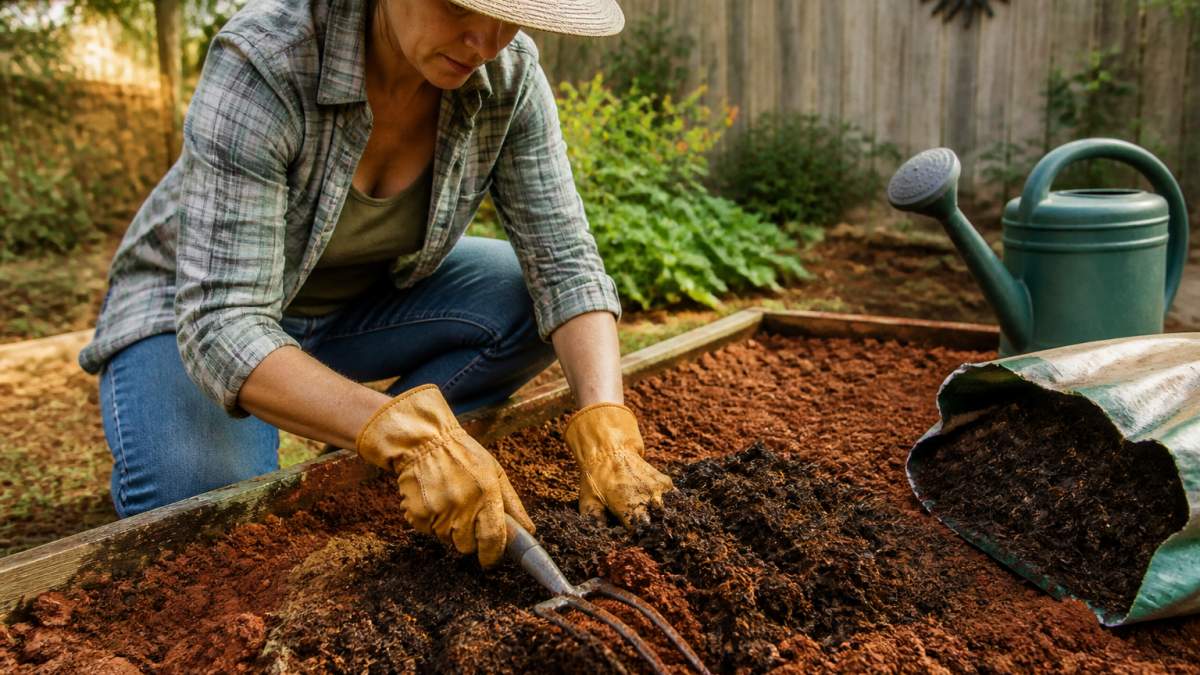
Improving clay soil takes patience and a few repeatable steps. Work in stages, and let each season build on the last.
Step 1: Check Soil Moisture Before You Touch It
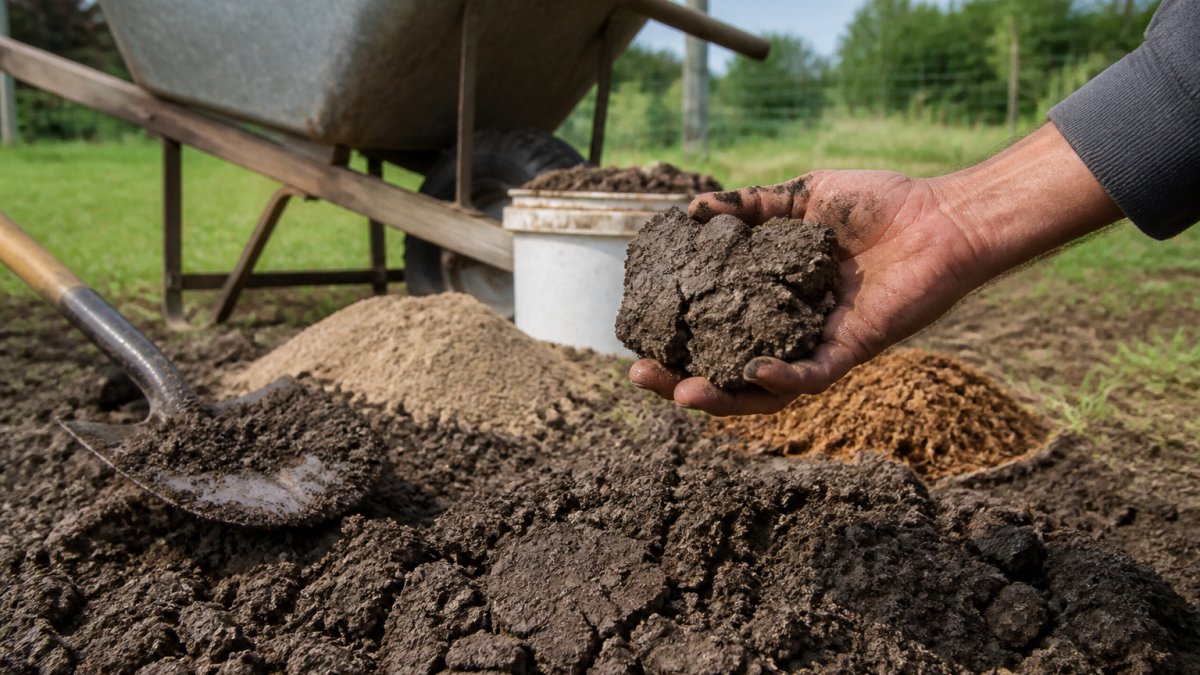
Grab a handful of soil from planting depth. Squeeze it. If water drips out, wait. If it crumbles, you are clear to work.
Working wet clay destroys structure faster than almost anything else. The damage can take years to undo.
Step 2: Add Organic Matter and Compost
Spread 2 to 4 inches of compost over the bed and work it into the top 6 to 8 inches with a fork or shallow-set tiller. Do not flip subsoil to the surface. Organic matter is the single most effective tool for clay: it glues tiny particles into larger crumbs, opening space for air, roots, and water.
Step 3: Loosen Gently and Reduce Compaction
Aerate compacted areas with a garden fork: push it in, rock it back, move on. Stay off beds when wet, every step compresses the structure you just built. Set paths and keep foot traffic there.
Step 4: Mulch and Protect the Surface
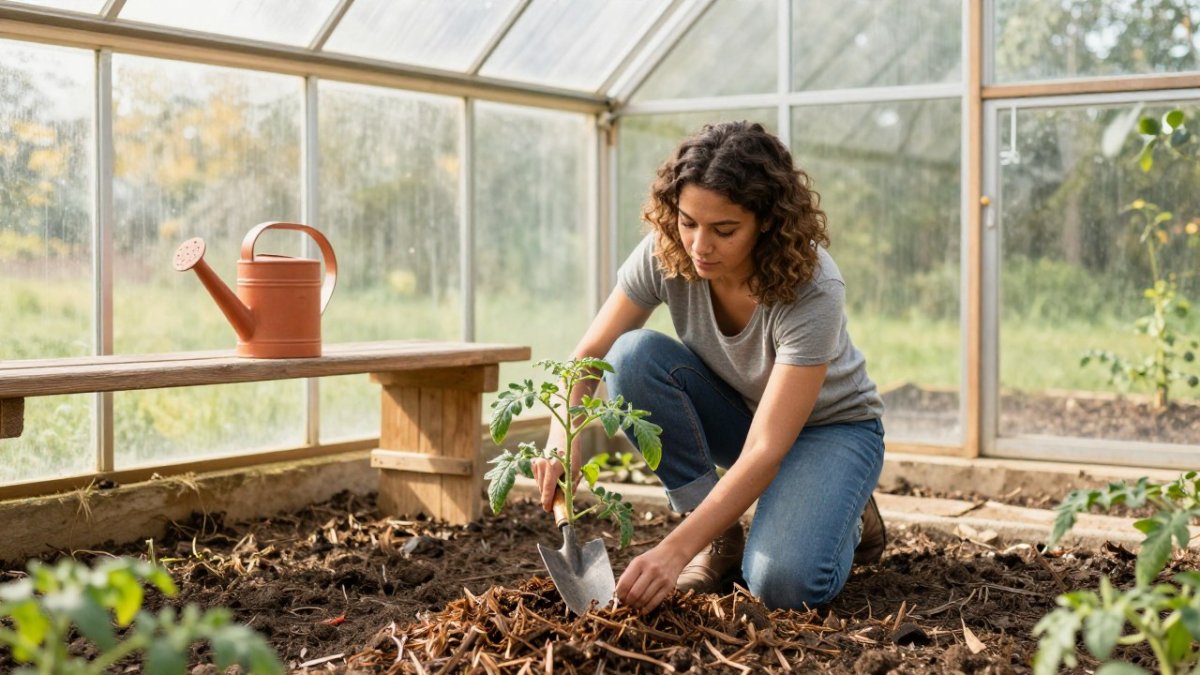
Apply 2 to 3 inches of mulch over the soil surface. Pecan mulch, shredded bark, and leaves all work well.
Mulch slows evaporation, keeps rain from crusting the surface, and feeds worms that do the loosening for you over time.
The Best Compost for Clay Soil (and How Much to Add)
The best compost for clay soil Texas beds need is well-aged, dark, and crumbly, with a mix of plant materials rather than a single source. Aged manure, leaf mold, and mushroom compost all work well in Texas clay.
How much to add depends on your starting point:
| Situation | Compost Layer | How Often |
|---|---|---|
| New bed, heavy clay | 3-4 inches worked into top 8 inches | Once, then top-dress yearly |
| Existing bed, improving | 1-2 inches as top dressing | Twice a year |
| Raised bed mix | 1 part compost to 2 parts soil | At build-out, then yearly |
| Problem drainage spot | 4 inches plus a raised bed | As needed |
Fresh manure burns roots, so let it age first. Clay improves over seasons, not days.
Gypsum for Clay Soil: What It Does and When It Won't Help
Gypsum is one of the most misunderstood amendments in gardening. It is not a general-purpose clay breaker, it helps only when the problem is high sodium, which is uncommon in most Texas garden beds.
What Gypsum Actually Does
Gypsum is calcium sulfate. In sodic soils with high exchangeable sodium, calcium from gypsum displaces sodium on clay particles, letting it flush away with water and allowing the clay to flocculate into larger crumbs.
But if your soil is not sodic, there is no sodium to displace. Adding gypsum to ordinary Blackland Prairie or Houston clay is money spent with no real return.
When Gypsum Helps in Texas
Gypsum may be part of the fix in these situations:
- Coastal areas with saline irrigation water, Repeated irrigation with high-sodium water can build up sodium in the soil.
- Sodic spots revealed by a soil test, If your test shows high exchangeable sodium percentage (ESP) or a sodium adsorption ratio (SAR) above the recommended threshold, gypsum can help.
- Hardpans with high sodium, Some Texas soils develop hardpans that are sodium-affected, but this is the exception, not the rule.
In most Texas garden beds, the clay is tight because of its structure and low organic matter, not because of sodium. Compost, mulch, and deep-rooted plants are the better investment.
How to Know If Gypsum Is Right for You
A soil test is the only way to know. Ask for sodium and the sodium adsorption ratio (SAR) on your test report. If sodium is high, gypsum may be part of the fix.
If you do need gypsum, apply it according to the test recommendation. A common rate for sodic soil is a few hundred pounds per 1,000 square feet, but the exact amount depends on your sodium levels and soil texture.
The Bottom Line on Gypsum
Gypsum is a targeted tool, not a general clay cure. Use it only when a soil test confirms high sodium. For most Texas gardeners, the path to better clay runs through organic matter, mulch, and patience.
Plants That Grow in Texas Clay Soil
Plants that grow in Texas clay soil include natives and adapted species with deep or fibrous roots that push through heavy ground. Choose these first and let them help break up the soil.
Good choices for our area:
- Native grasses like little bluestem and switchgrass
- Perennials such as coneflower, black-eyed Susan, and Turk's cap
- Shrubs like Texas sage and yaupon holly
Deep-rooted plants and cover crops are soil improvers. Their roots open channels for water and air, and their tops feed the soil when cut back.
Raised Beds and Drainage Fixes for Problem Sites
Raised beds solve clay drainage problems faster than any amendment.
For spots that stay wet for days, consider these fixes:
- Raised beds for vegetables and tender plants
- Berms and swales to redirect surface water
- French drains in low, soggy corners
Use the native clay beneath a raised bed as a base, not a barrier.
We are always glad to talk through a bed plan with new gardeners.
Clay soil will fight you for a season or two. Then it starts working with you.
If you want help choosing the right compost, mulch, or Texas-adapted plants for your Bonham garden, stop by Hoppy Farms Neighborhood Nurseries.
Frequently Asked Questions
What is the best thing to add to clay soil in Texas?
Compost is the single most useful addition. Spread 2 to 3 inches of finished compost over the bed and work it into the top 6 to 8 inches, or leave it on the surface as mulch and let earthworms and roots pull it down. Organic matter improves soil structure, water infiltration, and root growth over time. Add it in fall so winter rains and freeze-thaw cycles do the mixing for you, and repeat every year. Clay soil Texas gardeners fight for years responds slowly, so consistency matters more than any single product.
How much compost should I add to clay soil?
For a new bed, apply 2 to 3 inches of compost across the surface and mix it into the top 6 to 8 inches of soil. For annual maintenance, 1 inch per year is enough. More than 4 inches at once can create a rich layer that holds water differently than the clay below it, which slows drainage. If you are unsure, start with 2 inches, plant, and add more next season. Your soil test results and drainage observations should guide the exact rate.
Does gypsum really break down clay soil?
Gypsum helps only in specific cases. It works on sodic clay, where high sodium causes the soil to disperse and seal. Most Texas clay is not sodic, so gypsum will not loosen it noticeably. A soil test tells you whether sodium is the problem. On ordinary heavy clay, compost and mulch do far more for soil structure. Applying gypsum every year without a test wastes money and can unbalance soil chemistry.
When is the best time to work clay soil in Texas?
Fall is the best window. Soil is still warm, winter rains are coming, and freeze-thaw cycles help break up clods naturally. Amend in October or November so the bed settles before spring planting. Avoid working clay when it is wet, because you will create hard clods that take years to break down. Test moisture by squeezing a handful: if it forms a sticky ribbon, wait. If it crumbles, it is ready.