 How-to
How to Conserve Water in a Home Garden: A Practical Guide
Last Updated: November 21, 2026
Quick Summary
To conserve water in a home garden, start with a garden water audit: run a can test to measure your sprinkler output, estimate weekly use per zone, and fix leaks, overspray, and runoff. Then water deeply and infrequently in the early morning, and check soil moisture 5 to 10 cm down instead of watering on a fixed calendar.
- Run a can test to measure how long your sprinkler takes to apply 1 cm of water.
- Established beds need roughly 2-3 cm of water per week, applied every 5-7 days.
- Water between about 4 a.m. and 9 a.m., when air is cool and wind is calm.
- Drip irrigation delivers water slowly to the root zone with little evaporation loss.
- A 5 to 8 cm layer of mulch is the cheapest way to slow soil evaporation.
Table of Contents
- Start With a Garden Water Audit
- Water Deeply and Infrequently at the Right Time
- The Best Way to Water a Large Garden
- The Best Way to Water a Small Garden
- Drip Irrigation for Home Gardens
- Build Healthy Soil That Holds Water
- Mulch, Rain Barrels, and Greywater: Stretch Every Drop
- Pick Plants That Fit Bonham's Climate
- Frequently Asked Questions
Start With a Garden Water Audit
Before you change a single sprinkler setting, walk your garden and find out where water actually goes. A garden water audit is a simple hour-long check of your soil, your plants, and your watering habits.
Most guides stop at "check your sprinklers." A useful audit goes further: it gives you a baseline number you can compare against later.
Step 1: Measure what you apply. Set three or four straight-sided cans (tuna cans work well) at different points in a bed. Run your normal watering cycle and time how long it takes to collect 1 cm of water in the cans. If it takes 20 minutes to reach 1 cm, your system applies about 3 cm per hour. Repeat in two or three zones, because output varies with pressure and emitter spacing. Write the number down for each zone.
Step 2: Estimate weekly use. Multiply your application rate by the minutes you water per week.
| Garden type | Rough weekly target | Notes |
|---|---|---|
| Established beds | 2-3 cm | Deep soak every 5-7 days |
| New plantings | 1-2 cm | More frequent, shallower |
| Containers | Check daily | Water until it drains |
| Vegetable beds | 2-3 cm | Adjust for crop stage |
Step 3: Find the losses. Walk the system while it runs and look for three things: overspray onto pavement, fences, or bare ground; leaks at hose connections, valves, and emitters; and runoff where water sheets off a slope or heavy clay before it soaks in. A common pattern is a sprinkler head that has drifted out of adjustment and is watering the driveway for part of every cycle.
Step 4: Check soil moisture, not the calendar. Push a finger or a wooden stake 5 to 10 cm into the soil. If it comes out damp and cool, skip the watering.
Step 5: Set a baseline and recheck. Record your weekly minutes per zone, your can-test rate, and any leaks you fixed. Re-run the can test and the moisture check after two weeks.
Watch out: a single can test on a windy day can understate or overstate output, so test on a calm morning and repeat once before you trust the number.
Water Deeply and Infrequently at the Right Time
Deep, infrequent watering generally beats light daily sprinkling. A long soak pushes water down to the roots, where plants can use it. Shallow watering wets only the top centimetre, then evaporates. The Texas A&M AgriLife Extension Service guide to landscape watering explains that deep watering encourages deeper roots, which helps plants survive drought.
Early-morning watering is the gold standard. Water between about 4 a.m. and 9 a.m., when the air is cool and wind is calm. Evening watering leaves foliage wet overnight, which invites disease. Midday watering loses a large share of water to evaporation before it ever reaches the soil.
Watering schedule by garden type:
| Garden Type | How Often | How Deep |
|---|---|---|
| Established beds | Every 5-7 days | 2-3 cm per session |
| New plantings | Every 2-3 days | 1-2 cm per session |
| Containers | Daily in summer | Until water drains out |
| Vegetable beds | Every 3-4 days | 2-3 cm per session |
How Long to Water Garden With Sprinkler
Run time depends on your sprinkler's output, your soil type, and the weather, so measure rather than guess. The exact number depends on your sprinkler's output, your soil type, and the weather.
Here is a simple test. Set a few empty tuna cans around the bed. Run the sprinkler and time how long it takes to fill them to 2 cm. That is your target watering time. Sandy soil absorbs fast but holds little, so water in shorter bursts. Clay soil absorbs slowly, so run the sprinkler in two passes with a short break between them. This prevents runoff and helps water soak in.
The Best Way to Water a Large Garden
For a large garden, the best way to water is a zoned drip or soaker system on a timer, plus mulch. Hand-watering a big space wastes time and water, and sprinklers lose a lot to wind and evaporation.
Set up your large garden in zones grouped by water need. Group thirsty vegetables together and drought-tolerant beds together. Then run each zone on its own schedule. An irrigation timer removes the guesswork and stops the "just a quick top-up" habit that wastes so much water.
Place sprinklers so they water plants, not pavement, fences, or the side of the shed. Aim heads inward and adjust the arc. A few minutes with a screwdriver can cut a lot of runoff. Mulch each bed heavily to hold moisture and keep the soil cool.
The Best Way to Water a Small Garden
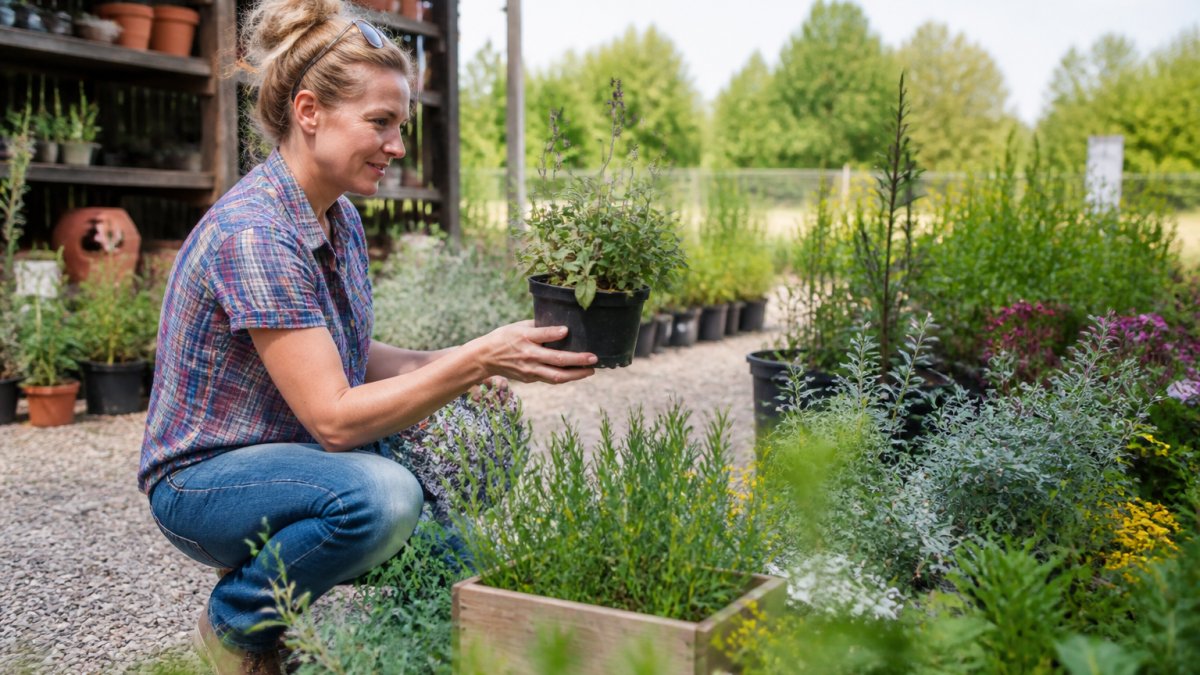
Small gardens win with a watering can, a hose with a shutoff nozzle, and a good layer of mulch. The best way to water a small garden is slow and targeted: deliver water right at the base of each plant and skip the foliage.
A few habits that save water in small spaces:
- Water in the early morning before the day heats up.
- Use a nozzle with a trigger so water stops when you move between pots.
- Group containers together so they shade each other.
- Set saucers under pots to catch runoff.
- Check containers daily in hot, windy weather.
Small gardens dry out fast, so containers often need water every day in summer. That is normal. The goal is to water thoroughly so it drains out the bottom, not to give a daily splash that only wets the surface.
Drip Irrigation for Home Gardens
Drip irrigation is the most water-efficient way to water a home garden.
What you need. A timer, a filter, a pressure regulator, and drip tubing or soaker hose laid along your beds. The U.S.
Sizing and layout. Group plants by water need into zones, then size each zone to the flow your tap and timer can support.
Emitter choice. Inline drip tubing with built-in emitters is simplest for long beds.
Setting up drip irrigation, step by step:
- Connect a timer to your outdoor tap.
- Attach a filter and pressure regulator.
- Run mainline tubing along the garden edge.
- Add drip lines or soaker hose down each bed.
- Cap the ends and flush the lines.
- Run a test cycle and check every emitter.
- Set the timer for early morning.
Troubleshooting the common failures. Drip lines clog, and a clogged line looks like it is watering while nothing reaches the roots.
Trade-offs to weigh. Drip uses less water and puts it at the roots, but it costs more up front than a hose and needs seasonal flushing and emitter checks.
Watch out: burying drip line too deep or covering emitters with heavy mulch can block outlets and hide leaks, so keep emitters visible and check them after every mulch refresh.
Build Healthy Soil That Holds Water
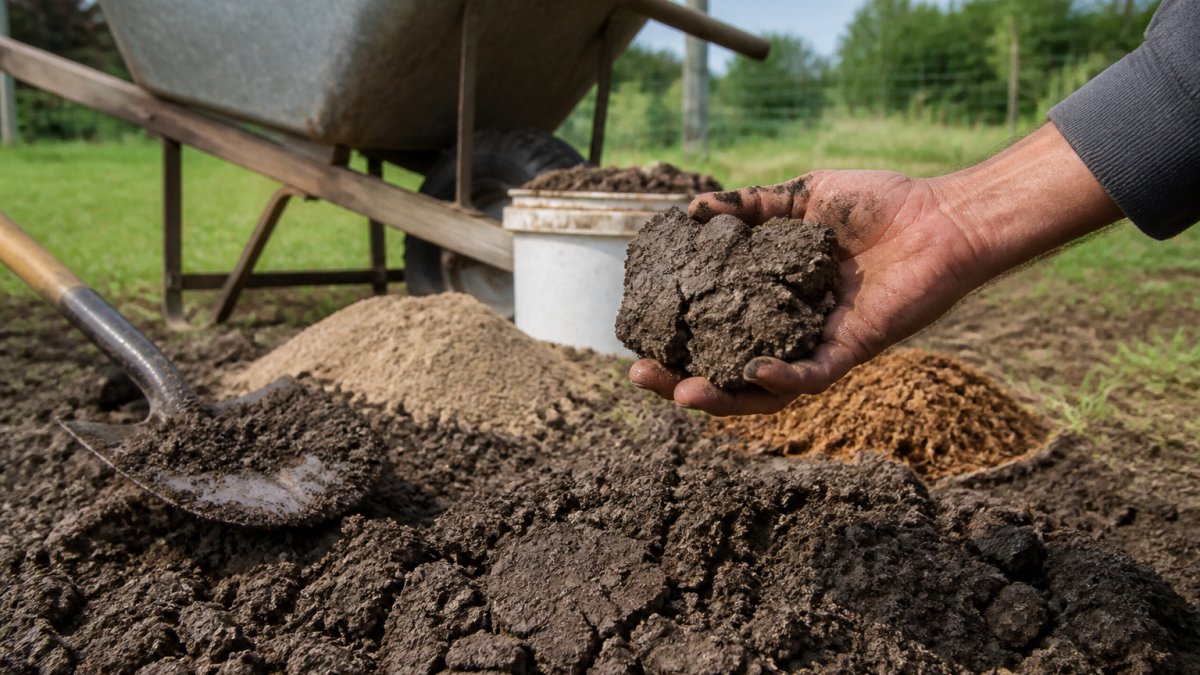
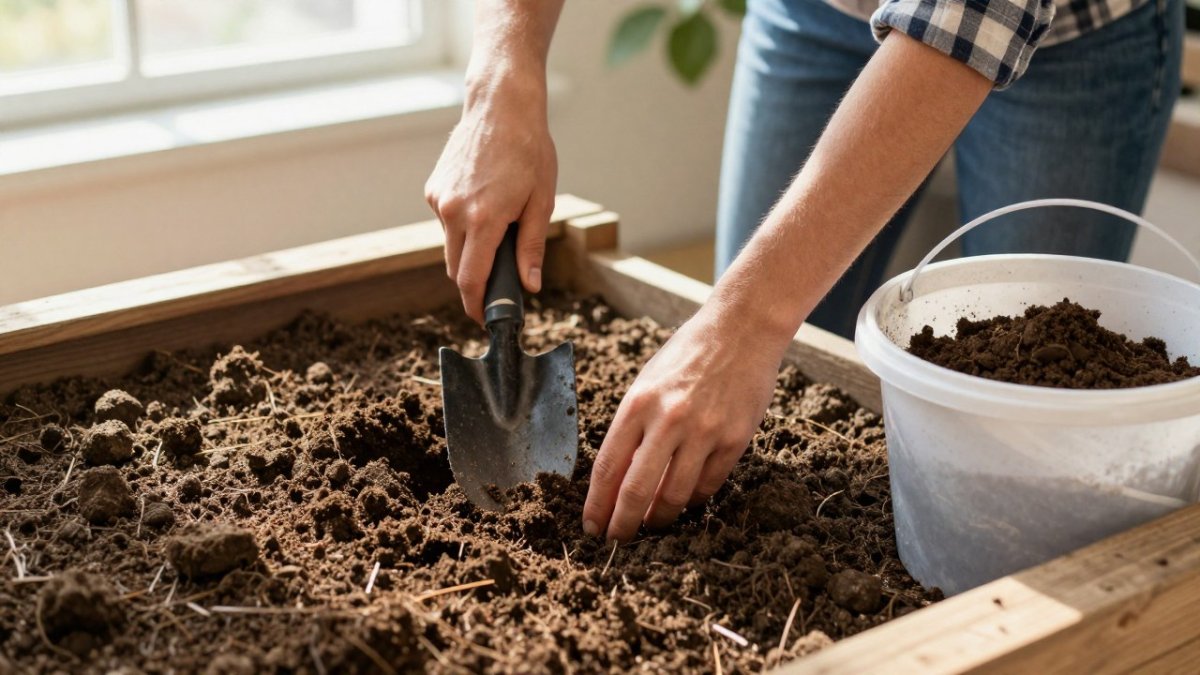
Healthy soil is a water storage tank. Soil rich in organic matter holds far more water than thin, compacted dirt, so every drop you add stays available to roots longer. This is the quiet secret behind water-wise gardening: fix the soil and you water less.
Improve soil structure by working in compost each season. Add a few centimetres to beds and let worms and roots do the rest. Avoid tilling wet soil, which smashes the structure. Keep beds covered so rain soaks in instead of running off. Our guide on how to improve clay soil in your Texas garden walks through the fix step by step, and our article on 7 ways to make garden soil better naturally covers compost, mulch, and other methods that boost water retention.
Mulch, Rain Barrels, and Greywater: Stretch Every Drop
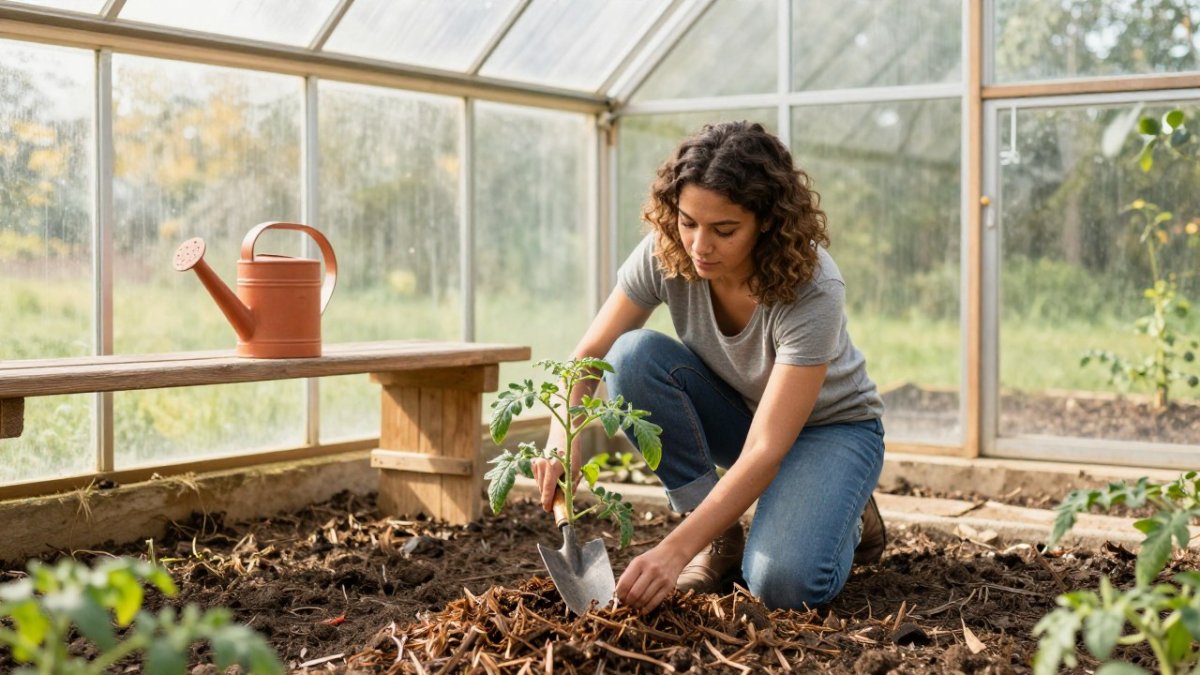
Mulch is the cheapest water saver in the garden. A 5 to 8 cm layer of straw mulch, shredded paper, newspaper, or cardboard slows soil evaporation and keeps the soil temperature steady. Keep mulch a few centimetres back from stems so plants do not rot.
Rain barrels capture free water from your roof. A rain barrel hooked to a downspout gives you a supply for dry spells and reduces runoff. Check local rules before using roof water on edibles.
Greywater, the water from sinks, showers, and laundry, can stretch your supply further. Use it carefully in edible gardens:
- Use only gentle, plant-safe soaps.
- Apply greywater to the soil, not the leaves.
- Do not store it; use it within a day.
- Skip it on root crops you eat raw.
- Check current rules on greywater use with the official state source before you plumb anything.
Pick Plants That Fit Bonham's Climate
The easiest way to conserve water is to grow plants that do not need much. Native plants and drought-tolerant plants are built for North Texas heat, wind, and dry spells. They need less watering once established and handle our soil better than most imports.
Group plants by water needs so you are not soaking a drought-tolerant bed to keep one thirsty shrub alive. Put high-water plants together near the hose, and low-water plants together where the sprinkler barely reaches.
If you are ready to plan a full water-wise yard, our guide on how to plan drought resistant landscaping in North Texas maps out the process. New to native plants? Start with our list of 5 best native Texas plants for beginners.
Watering well is a skill, and it starts with knowing your soil and your plants. Hoppy Farms Neighborhood Nurseries is here to help you build a garden that thrives on less.
Frequently Asked Questions
What are the best ways to conserve water in my garden?
Start with the basics that deliver the biggest savings: water deeply and less often so roots grow down, water early in the morning when evaporation is lowest, and put down two to three inches of mulch to slow soil evaporation. Group plants by water needs so you are not soaking drought-tolerant plants to reach thirsty ones. Add a rain barrel to catch roof runoff, and switch beds to drip irrigation or soaker hoses so water goes to the roots instead of the pavement. A quick soil moisture check before each watering stops you watering when the garden does not need it.
How long should I run a sprinkler to water my garden?
There is no single number because sprinkler output, water pressure and soil type all change the answer. Run the sprinkler for 15 minutes with a few empty tuna cans or cups spread across the bed, then measure how much water collected. Adjust your run time until the cans show the depth your plants need. Sandy soil absorbs fast, so split the watering into two shorter runs; clay soil takes water slowly and benefits from a soak, a pause, then a second soak.
Can a garden go 4 days without water?
Established native and drought-tolerant plants often can, especially with mulch and healthy soil. Young transplants, seedlings and container plants usually cannot, because their root systems are shallow and dry out fast. If you are leaving for a few days, water deeply the morning you go, move containers into shade, and group pots together to slow moisture loss. For longer trips, a timer on drip irrigation or a simple wick system made from cotton cord and a water reservoir keeps small gardens going.
Is drip irrigation worth it for a home garden?
For most home gardens, yes. Drip irrigation for home gardens delivers water straight to the root zone, so less is lost to evaporation, wind and runoff, and foliage stays dry, which lowers disease pressure. It also pairs easily with a timer, so watering happens early in the morning even when you forget. Starter kits suit small beds and containers, while larger gardens benefit from rows of drip line or soaker hose.