 How-to
How to Pick Plants That Thrive Locally in Bonham, Texas
Last Updated: October 25, 2026
Quick Summary
To pick plants that thrive locally, start with your frost dates and temperature extremes, since Fannin County sits in USDA zone 8a with winter lows around -12 to -9°C. Then measure your sun hours, test your clay soil's drainage, and match plants to your real water budget and maintenance limits.
- Fannin County sits in USDA hardiness zone 8a, so check your frost dates before buying anything.
- Measure sun exposure at 9am, noon, 3pm, and 6pm on two sunny days.
- Run a jar test to see how much clay your soil holds before choosing plants.
- Group beds into hydrozones so one sprinkler run serves plants with the same water need.
- Verify choices with the Lady Bird Johnson Wildflower Center database and your Texas A&M AgriLife Extension office.
Table of Contents
- Start with Your Local Climate and Frost Dates
- How to Determine Garden Sun Exposure
- Test Your Soil: Plants for Clay Soil in North Texas
- Match Plants to Your Water and Maintenance Limits
- Choose Native Plants for North Texas
- Pick Drought-Tolerant Plants for Texas Summers
- Use a Plant Selection Checklist and Verify with Local Sources
- Visit Hoppy Farms for Personalized Plant Picks
- Frequently Asked Questions
Start with Your Local Climate and Frost Dates
Learning how to pick plants that thrive locally starts with two facts: your frost dates and your temperature extremes. At Hoppy Farms Neighborhood Nurseries, we tell every new gardener the same thing. A plant that survives Bonham's summer can still die in its winter, and the reverse is just as true.
Fannin County sits in USDA hardiness zone 8a, which means winter lows usually bottom out around -12 to -9°C. Check your own frost dates through the USDA Plant Hardiness Zone Map and the National Weather Service frost data before you buy anything.
Here is what to record before you shop:
- First fall frost date and last spring frost date for your address
- Lowest winter temperature you have seen in the past decade
- Hottest summer stretch and how long it lasts
- Average rainfall and your driest month
A common mistake is buying a plant labeled "hardy" without checking which zone that label assumes. Zone 8a is not zone 9, and a zone 9 plant will struggle through a hard North Texas winter. Write your numbers down and bring them with you.
How to Determine Garden Sun Exposure
Garden sun exposure is the total hours of direct sunlight a spot receives on a clear day, measured in summer when the sun is highest.
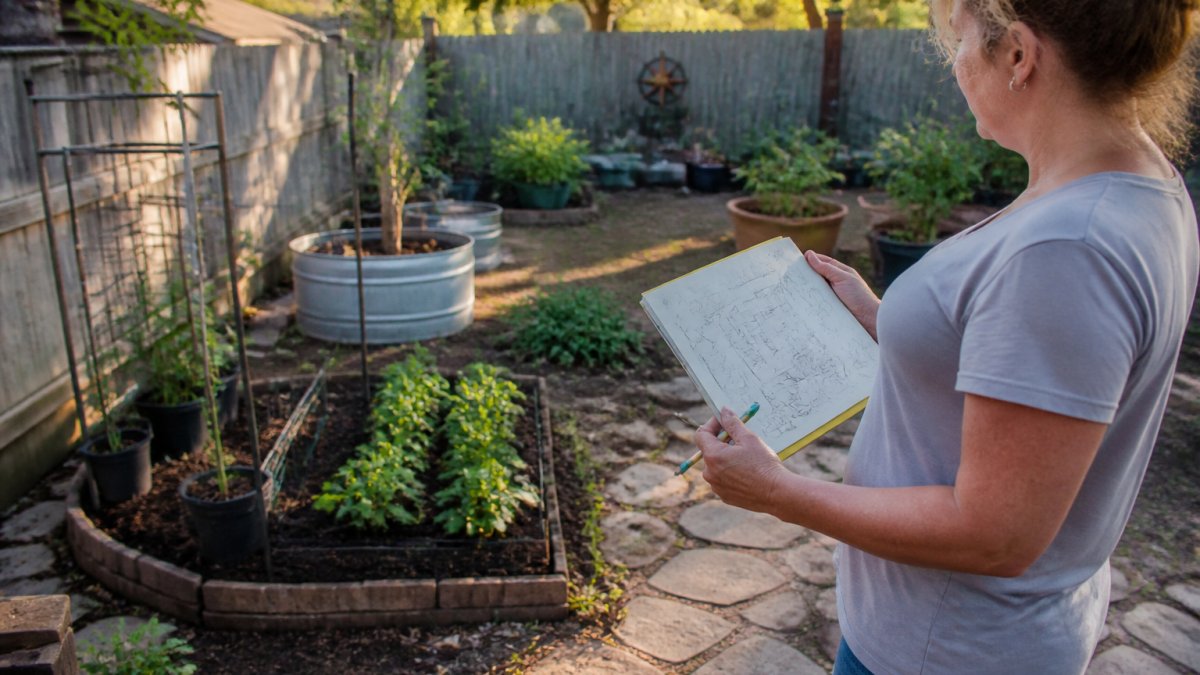
Here is how to measure it properly:
- Pick your intended bed and mark it with a stake.
- Check the spot at 9am, noon, 3pm, and 6pm on a sunny day.
- Write down "sun" or "shade" for each check.
- Repeat on a second day to confirm the pattern.
Full sun means six or more hours of direct light. Partial shade means three to six hours, often with a break from afternoon heat. Full shade means less than three hours.
In Bonham, afternoon sun is the brutal shift. A bed with morning sun and afternoon shade is a gift in July, while a west-facing bed will scorch anything not heat-adapted.
Test Your Soil: Plants for Clay Soil in North Texas
Plants for clay soil in North Texas need one thing above all: drainage.
The jar test takes a day and costs nothing:
- Fill a clear jar one-third with soil from your bed.
- Add water to near the top and a drop of dish soap.
- Shake hard, then let it sit for 24 hours.
- Sand settles first, silt next, clay last. Measure each layer.
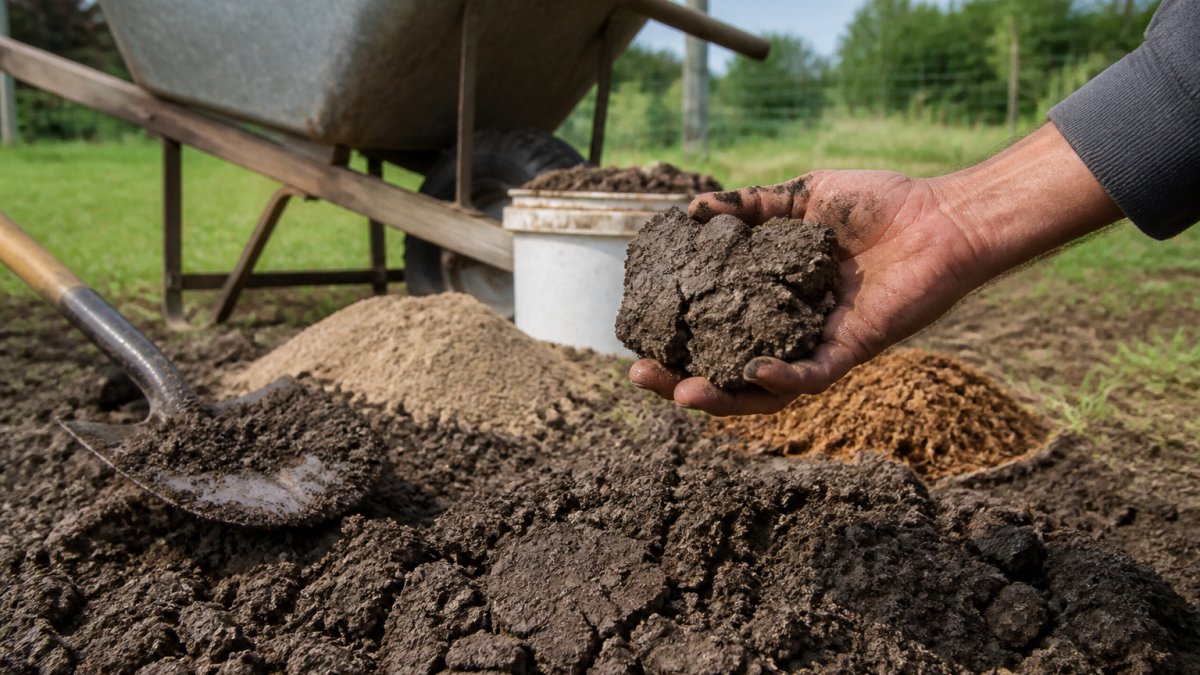
Mostly clay at the bottom? You have heavy soil. Don't replace it, amend with compost and plant in raised mounds so water drains away from the crown.
Then check drainage directly. Dig a hole about 30cm deep, fill it with water, and see how long it takes to empty.
Clay soil is not a curse, it holds nutrients well. Choose plants that tolerate it and you will spend far less time watering.
Match Plants to Your Water and Maintenance Limits
Honest self-assessment beats wishful planting. Ask how much time you will actually spend watering in August, not how much you intend to.
Measure your real water supply, not your hopes.
Next, group your beds into hydrozones, areas with the same water need and sun exposure.
Use this filter to translate your situation into plant categories:
| Your situation | Realistic weekly water budget | Maintenance level | Plant categories to favor | Plant categories to avoid |
|---|---|---|---|---|
| Busy, travels often | Under 20 L per bed | Low | Native grasses, established perennials, succulents, rosemary, yucca | Container tropicals, leafy vegetables, newly planted shrubs |
| Home most days | 20-60 L per bed | Medium | Herbs, seasonal flowers, compact vegetables, native shrubs | High-water turf, bog plants, plants labeled "moisture-loving" |
| Wants a project | Over 60 L per bed | High | Raised-bed vegetables, containers, tropicals, cut-flower beds | Drought-only plants that rot with extra water |
| New to gardening | 20-40 L per bed | Low to medium | Easy-care natives, herbs, tough perennials | Anything requiring daily hand-watering in summer |
Water deeply and less often. A long soak twice a week builds deeper roots than a daily sprinkle.
Finally, be honest about maintenance, not just water. Pruning, deadheading, dividing, and pest-checking add up.
Choose Native Plants for North Texas
Native plants for North Texas evolved here, so they already handle our clay, heat, and unpredictable rain. They need less water, less fertilizer, and less fuss once established.
Good choices for a Bonham yard include:
- Texas sage for dry, sunny spots and silver foliage
- Black-eyed Susan for summer color and pollinators
- Coneflower for long bloom and drought tolerance
- Little bluestem and other native grasses for texture
- Flame acacia for a tough, heat-loving shrub
Native and locally adapted ornamentals are an angle most plant guides skip.
One caution: "native" does not mean "plant anywhere." A native that wants dry, sandy ground will still sulk in wet clay. Match the plant to the spot, not just to the state.
Pick Drought-Tolerant Plants for Texas Summers
Drought-tolerant plants for Texas survive on less water, but "drought-tolerant" is not "plant it and forget it." Almost everything needs regular water through its first season while roots establish.
Drought tolerance is not one trait. Plants survive dry spells in different ways, and those mechanisms tell you where they will succeed:
- Water-storing succulents (agave, yucca, some sedums) hold moisture in thick leaves or stems. They tolerate dry soil but rot in wet clay, so they need sharp drainage, mounds, raised beds, or gravelly soil.
- Deep-rooted perennials (rosemary, native grasses, many wildflowers) send roots far down to find moisture. They need deep initial watering to establish those roots, then less frequent watering afterward.
- Silver or hairy-leaved plants (Texas sage, lavender, some artemisias) reflect sunlight and trap moisture with leaf hairs. They handle heat and sun but often demand excellent drainage and low humidity.
- Summer-dormant plants (some native bulbs and grasses) go quiet in the hottest weeks and return with rain. They look dead in August, which alarms new gardeners, but they are conserving energy.
Reliable performers for Bonham summers, matched to their mechanism and soil need:
- Agave and other succulents for sharp structure and full sun, require sharp drainage, not clay
- Yucca for height and heat resistance, tolerates poor soil but needs dry feet
- Lantana for color that shrugs off the heat, moderately drought-tolerant, dies back in hard winters
- Rosemary for an evergreen herb that hates wet feet, excellent drainage is non-negotiable
- Ornamental grasses such as little bluestem for movement and low water demand, deep roots, tolerant of clay once established
- Texas sage for silver foliage and dry, sunny spots, demands drainage and full sun
Water deeply and less often. A long soak twice a week builds deeper roots than a daily sprinkle. Water early in the morning so moisture soaks in before the sun pulls it back out.
Watch out: planting drought-tolerant species in heavy clay without improving drainage is the fastest way to kill them, they tolerate dry soil, not soggy roots.
To verify a drought-tolerant choice for your specific yard, check the Lady Bird Johnson Wildflower Center native plant database for water requirements and native range, and ask your county's Texas A&M AgriLife Extension office about regional performance. Then look at what is thriving in unwatered medians and older neighborhoods near you, those plants are already passing the local test.
Use a Plant Selection Checklist and Verify with Local Sources
Run every plant through the same checklist before it goes in your cart. This is the practical, location-specific workflow most guides leave out.
- Does it survive zone 8a winter lows?
- Does it handle our summer heat and humidity?
- Does it match the sun hours in my chosen bed?
- Will it tolerate my clay, or does the bed need amending?
- Does its water need fit my real schedule?
- Is it the right size for the space at maturity?
- Is it safe around kids and pets?
- Can I verify it grows here, not just "in Texas"?
That last box is where local sources earn their keep. Check the Lady Bird Johnson Wildflower Center native plant database for native ranges and growing needs. Your county's Texas A&M AgriLife Extension office publishes regional planting guidance written for our conditions.
Then talk to people who grow here.
One more factor most guides ignore: microclimates. Your south-facing wall stays warmer than your open lawn. A low spot collects cold air and frost. Walk your yard and note these differences.
And plan for the future. Our summers are trending hotter and drier. Choosing tougher, more heat-adapted plants now saves you replanting later.
Visit Hoppy Farms for Personalized Plant Picks
A plant list is a starting point. Matching it to your actual yard takes eyes on the ground. That is where we come in.
Hoppy Farms Neighborhood Nurseries is a mother/daughter owned nursery in Bonham, and we grow for these conditions. Bring your sun sketch, your soil jar results, and your frost dates. We will help you match plants to your beds, your schedule, and your family.
You get:
- Personalized advice from people who garden in this same clay and heat
- Locally focused plant choices suited to zone 8a
- A welcoming, kid-friendly stop where gardening feels less intimidating
- Educational help for first-time gardeners who do not want to waste money on plants that die
New to gardening? Tell us. We will start you with tough, forgiving plants and show you how to care for them.
Frequently Asked Questions
How do I find out which plants grow well where I live?
Start by finding your USDA hardiness zone and average frost dates, then watch your yard for a full day to map sun and shade. Dig a handful of soil to feel whether it is clay, loam, or sand. Take that information to a local nursery and ask for plants that match those exact conditions. In Bonham, Texas, that means choosing plants that handle hot summers, occasional winter freezes, and heavy clay soil.
What native plants grow well in North Texas?
Native plants for North Texas include black-eyed Susan, coneflower, Texas sage, flame acanthus, and little bluestem grass. These species evolved in local heat and clay, so they need less watering once established. Ask at a neighborhood nursery which natives suit your sun exposure and soil depth. Group them by water need so you are not mixing thirsty plants with drought-tolerant ones in the same bed.
How do I choose drought-tolerant plants for a Texas garden?
Look for silver or narrow leaves, deep taproots, and plants labeled for full sun and low water. Native and adapted species like agave, yucca, and ornamental grasses handle Texas heat better than tropical imports. Plant them in well-drained soil and water deeply but infrequently during the first year. After establishment, most drought-tolerant plants for Texas need little supplemental irrigation.
How can I tell whether a plant suits my yard's sun and soil conditions?
Read the plant tag for sun and water needs, then compare it to your own notes. If your bed gets six or more hours of direct sun, choose full-sun plants; if it gets afternoon shade, pick partial-shade types. For clay soil, choose plants that tolerate slow drainage or amend the bed with compost. A local nursery can confirm whether a specific plant will survive your conditions before you buy.
Picking plants that thrive locally is not about finding the perfect species. It is about matching real plants to your real conditions, and that takes local knowledge. Stop by Hoppy Farms Neighborhood Nurseries with your yard notes, and we will help you choose plants built for Bonham. Get started with us and build a garden that lasts.