 blog
Is Organic Pest Control Good for Vegetable Gardens?
Last Updated: November 14, 2026
Quick Summary
Yes, for most home gardeners organic pest control is a strong choice, especially when you pair prevention with targeted treatment. Organic pest control means managing pests with natural predators, cultural practices, and low-impact products instead of synthetic chemicals. It works best when you plan ahead.
- Organic methods are slower, taking days to weeks, while conventional contact insecticides can knock pests down in hours.
- Scout the garden two or three times a week, checking under leaves, along stems, and at the soil line.
- Spread 5-8 cm of mulch around plants without touching stems to even moisture and shelter ground beetles.
- Mix one teaspoon of mild liquid soap into one litre of water, test on a single leaf, then spray in the evening.
- Spray in the evening and never on open flowers to protect pollinators from neem oil and insecticidal soap.
Table of Contents
- Organic vs. Conventional Pest Control: A Side-by-Side Comparison
- How to Prevent Pests in Vegetable Garden Organically
- Identifying Garden Pests and Inspecting Plants for Damage
- Pros and Cons of Common Organic Methods
- The Best Organic Pest Control for Garden Beds
- Choosing a Safe Insecticide for Vegetable Garden Crops
- A Natural Garden Pest Control Recipe You Can Mix at Home
- Picking Up Supplies and Advice in Bonham
- Frequently Asked Questions
Organic vs. Conventional Pest Control: A Side-by-Side Comparison
Is organic pest control good for vegetable gardens? Yes, for most home gardeners it is a strong choice, especially when you pair prevention with targeted treatment.
The honest answer is that organic control is not a magic spray. It is a system. You build healthy soil, keep the garden clean, and treat problems early.
Here is how the two approaches stack up on the factors that actually decide whether organic is good for your garden:
| Factor | Organic Control | Conventional Control |
|---|---|---|
| Speed of knock-down | Slower, days to weeks for most products | Fast, often hours for contact insecticides |
| Spectrum | Narrow, targeted to specific pests | Broad, kills many insects including beneficials |
| Residue concerns | Lower when labels are followed; most botanical products break down quickly | Higher; strict harvest intervals and re-entry rules apply |
| Pollinator risk | Manageable with evening timing and avoiding open flowers | Can be high with broad sprays, especially during bloom |
| Soil and ecosystem impact | Builds soil life over time; supports beneficial insects | Can disrupt beneficials and soil biology with repeated use |
| Cost and effort | More monitoring and scouting; less product cost | Less scouting; more reliance on repeat sprays and product cost |
| Time to results | Slower; requires patience and repeat applications | Faster; may need fewer applications for severe outbreaks |
| Best for | Prevention-first home gardens and mild-to-moderate pressure | Severe, fast-moving outbreaks or when a crop is about to be lost |
The trade-off is real. Organic methods ask for more attention and patience.
Effectiveness also depends on the pest.
Watch out: do not assume organic means harmless.
How to Prevent Pests in Vegetable Garden Organically
Prevention is the whole game. A garden that starts healthy and clean has far fewer pest problems than one that gets sprayed after damage appears.
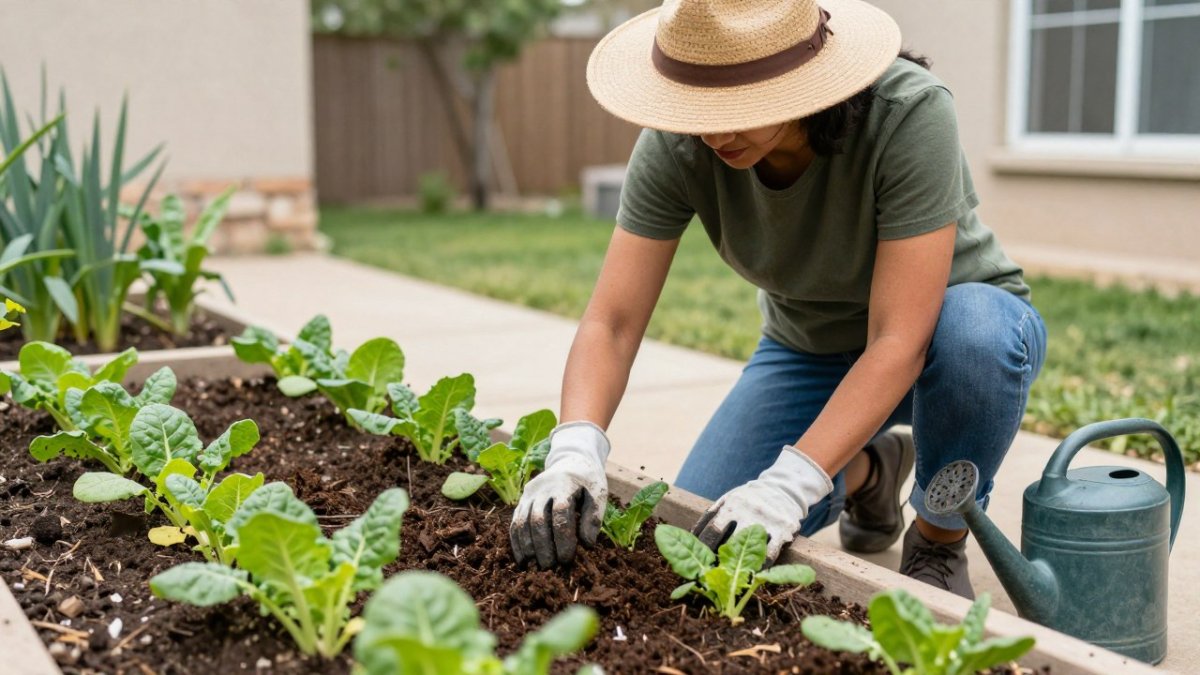
Build Healthy Soil and Compost First
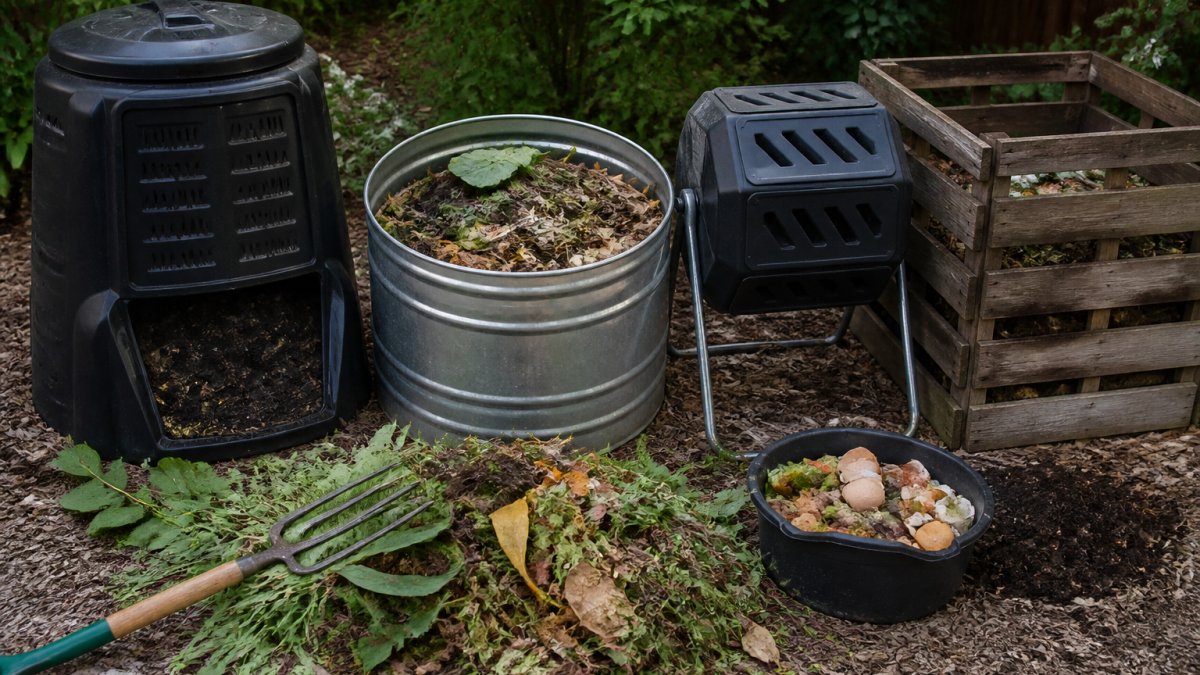
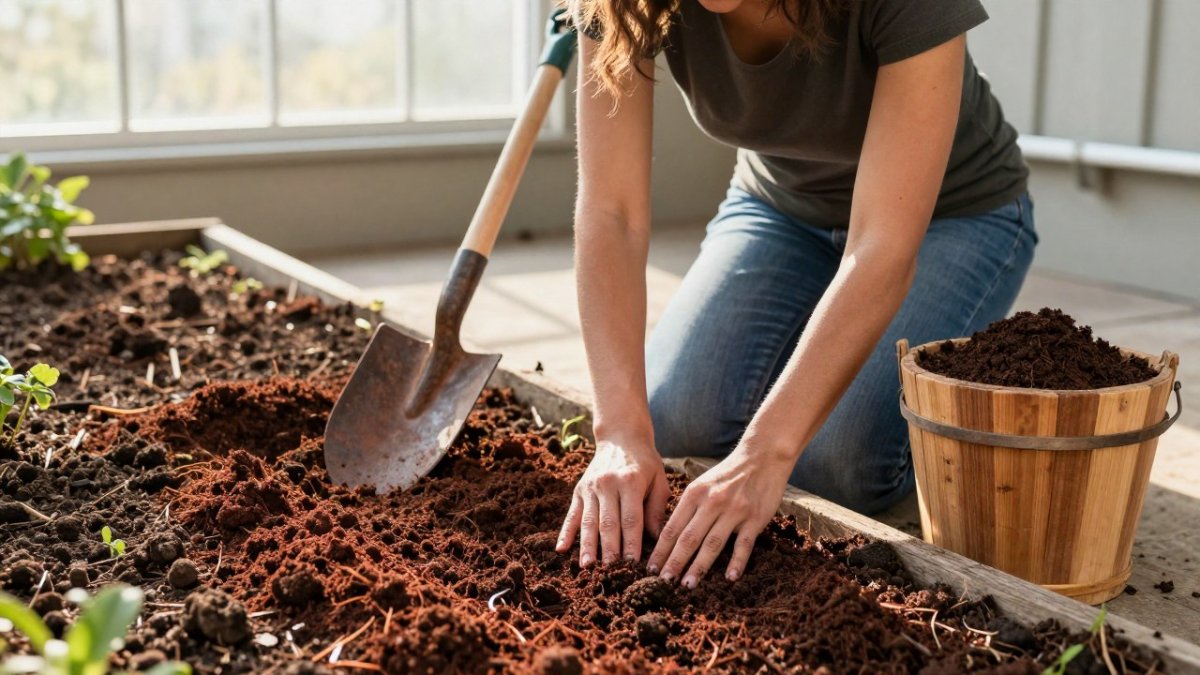
Healthy soil grows strong plants, and strong plants shrug off pests better. Compost is the backbone of that. It feeds soil life, holds moisture, and helps roots grow deep.
- Add finished compost before each planting
- Keep a compost pile going with kitchen scraps and garden waste
- Avoid overwatering, which stresses roots and invites problems
- Test your soil now and then to catch imbalances early
Weak, stressed plants send out signals that pests pick up on. Good soil health is your first defense.
Mulch, Sanitation, and Cultural Controls
Mulch does more than hold weeds down. It keeps soil moisture even, stops soil from splashing onto leaves, and gives ground beetles and spiders a place to hunt.
- Spread 5-8 cm of mulch around plants, not touching stems
- Clear dead leaves and spent plants, which harbor pests and disease
- Rotate crops so the same family does not grow in the same bed each year
- Space plants for airflow, because crowded beds invite trouble
Garden sanitation is unglamorous but powerful. Many pests overwinter in plant debris. Clean beds in fall mean fewer pests in spring.
Identifying Garden Pests and Inspecting Plants for Damage
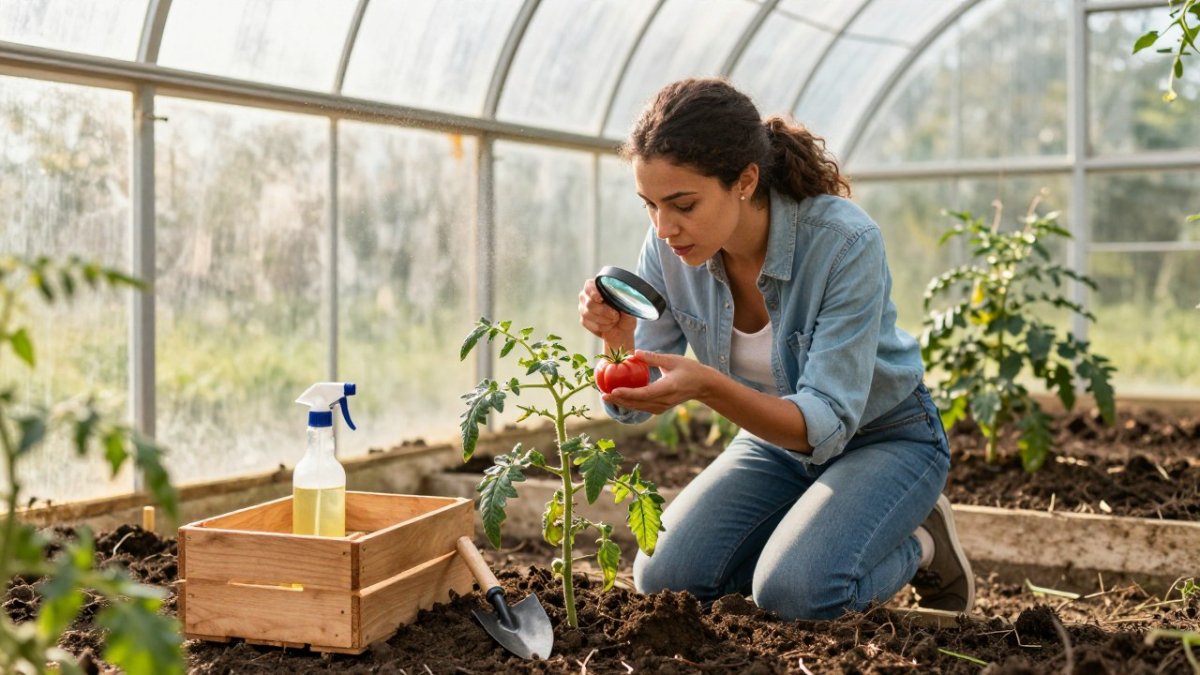
You cannot fix a problem you have not named. Pest identification starts with a slow walk through the garden two or three times a week. Look under leaves, along stems, and at the soil line.
Common vegetable garden pests to know:
- Aphids: tiny clusters on new growth, sticky leaves
- Caterpillars: chewed holes in leaves, especially on leafy greens and broccoli
- Spider mites: fine webbing, speckled yellow leaves
- Cucumber beetles: striped or spotted, damage on cucumber and squash
- Slugs and snails: ragged holes, slime trails at night
Learn the difference between pest damage and disease. Holes and chewed edges point to insects. Yellowing, spots, and wilting often mean disease or poor soil. Inspecting plants for damage early lets you act while the problem is small.
Pros and Cons of Common Organic Methods
Every organic method has a place, and every one has a limit. Here is a straight look at the tools most home gardeners reach for.
- Hand-picking: Free and precise. Best for small gardens and big insects. Slow on large infestations.
- Beneficial insects: Ladybugs and lacewings eat pests for you. They need habitat and time to establish.
- Neem oil: Handles many soft-bodied pests. Must be applied at the right time and can harm pollinators if sprayed on flowers.
- Insecticidal soap: Gentle and fast on aphids and mites. Only works on contact and can burn leaves in heat.
- Bt (Bacillus thuringiensis): Targets caterpillars only. Harmless to bees, but timing matters.
- Row covers: Physical barrier with no chemicals. Must be removed for pollination.
The pattern is clear: organic methods are targeted. They work well when matched to the right pest and applied correctly. They disappoint when used as a broad, hopeful spray.
The Best Organic Pest Control for Garden Beds
The best organic pest control for garden combines physical removal, habitat for natural predators, and spot treatment only where needed. Start with your hands and your eyes before you reach for a bottle.
Hand-Picking, Pruning, and Mechanical Controls
Mechanical controls are the most underrated tools in the garden. They cost nothing and cause no harm to pollinators.
- Knock aphids off with a strong water spray
- Pick caterpillars and beetles into a bucket of soapy water
- Prune off heavily infested leaves and dispose of them away from the compost
- Use row covers on young plants until flowering
- Set slug traps with boards or shallow dishes
Watch out: do not toss infested plant material into your compost pile unless it heats properly. You can simply spread the problem back onto your beds.
Beneficial Insects and Natural Predators
Natural predators do quiet, constant work. Ladybugs, lacewings, hoverflies, and parasitic wasps all feed on common pests. Ground beetles patrol the soil surface.
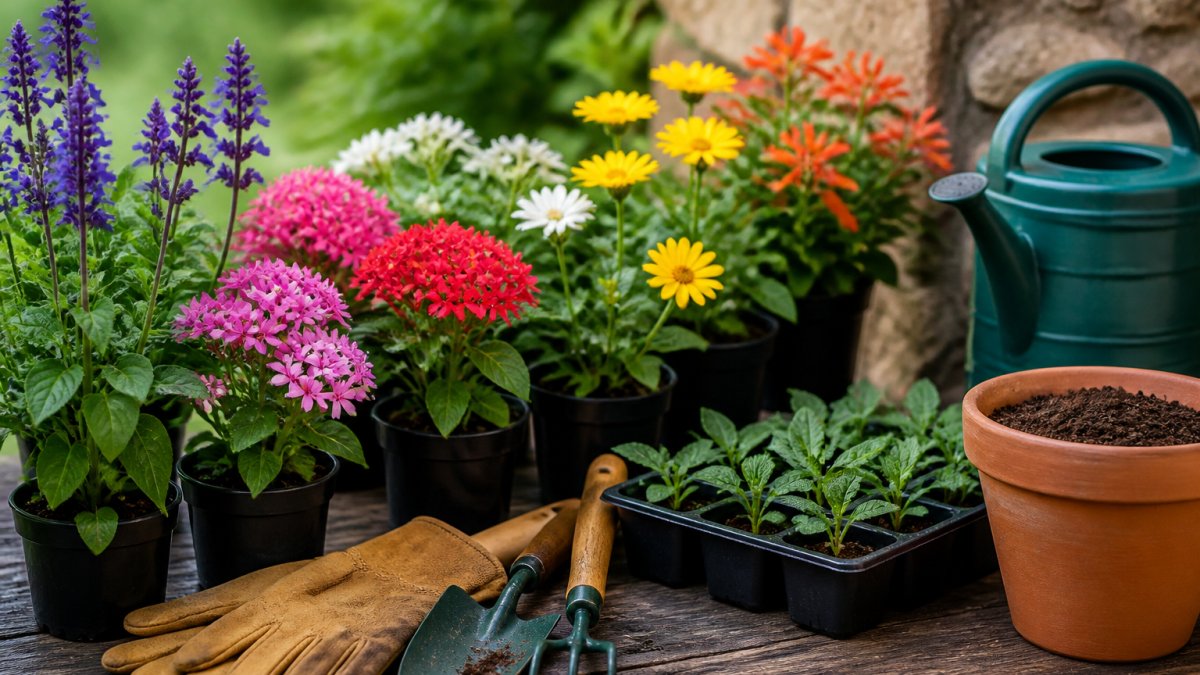
- Plant flowers like marigolds, dill, and fennel to attract them
- Skip broad sprays that kill the good insects along with the bad
- Give predators shelter with mulch and dense plantings
- Be patient, because populations take a few weeks to build
Pollinators matter too. Bees and butterflies are part of a healthy garden ecosystem, and organic methods protect them far better than broad-spectrum sprays.
Choosing a Safe Insecticide for Vegetable Garden Crops
A safe insecticide for vegetable garden crops is one that targets the pest, breaks down reasonably, and is used exactly as the label says. Organic does not mean risk-free. Even natural products can harm bees or leave residue if misused. The key is matching the product to the pest, the crop, and the timing.
Neem Oil, Insecticidal Soap, and Bt
These three cover most home garden situations, but each works differently.
- Neem oil: Derived from the neem tree, it disrupts feeding and molting in soft-bodied pests like aphids, mites, and whiteflies. It needs thorough coverage and works best in the evening when pollinators are quiet. It can harm beneficial insects if sprayed directly on them.
- Insecticidal soap: Works only on contact, dissolving the protective coating of soft-bodied pests. It has no residual activity, so it must hit the pest directly. Test on a small area first, since it can burn leaves in hot weather or on sensitive plants.
- Bt (Bacillus thuringiensis): A soil bacterium that produces proteins toxic only to caterpillars when eaten. It must be consumed by the pest to work, so thorough leaf coverage matters. It is harmless to bees and most beneficials, but timing matters because it breaks down in sunlight within a few days.
Spray application matters as much as the product. Coat both sides of leaves, and never spray in the heat of the day or right before rain. Repeat applications are often needed because these products break down quickly.
Label Reading, Harvest Intervals, and Pollinator Safety
The product label is the law, even for organic products. Read it every time.
- Check the pre-harvest interval (PHI), which tells you how many days to wait before picking. Organic products often have short intervals, but they are not zero.
- Follow the dose exactly, because more is not better and can burn plants or leave residue.
- Note the re-entry interval, which tells you how long to wait before working in the treated area.
- Spray in the evening to protect pollinators, and never spray open flowers.
- Wash produce before eating, organic or not, to remove dust, insects, and residue.
For current guidance on safe pesticide use, check the EPA pesticide safety information and your local extension service. These sources explain residue limits and label rules in plain terms.
Watch out: do not mix products or increase concentration beyond the label. Combining organic products does not make them stronger, and it can injure plants or create unsafe residue.
A Natural Garden Pest Control Recipe You Can Mix at Home
A simple natural garden pest control recipe uses mild soap and water for soft-bodied pests. Mix one teaspoon of mild liquid soap into one litre of water in a spray bottle.
It is often used on soft-bodied pests such as aphids and mites. Do not add more soap, since stronger is not safer for your plants.
This recipe is a starting point, not a cure-all. Pair it with hand-picking, healthy soil, and beneficial insects, and you have a complete organic system.
Picking Up Supplies and Advice in Bonham
Local conditions shape which pests show up and when, so timing matters wherever you garden.
If you are new to gardening, start small. We also carry native Texas plants for beginners that handle local conditions with less fuss.
Come by the nursery, ask questions, and let us help you build a garden that gets healthier each season.
Organic pest control rewards the gardener who pays attention. It asks for patience, regular scouting, and a little planning, and it gives back a garden full of pollinators and healthy soil.
Frequently Asked Questions
What is the best organic pesticide for my vegetable garden?
There is no single best option, because the right choice depends on the pest and the crop. Neem oil covers many soft-bodied insects and some fungal issues, insecticidal soap works on aphids and mites, and Bacillus thuringiensis targets caterpillars on broccoli and leafy greens. Start with the least disruptive method, identify the pest first, and apply in the evening when pollinators are less active. Rotate products so pests do not build tolerance.
What are the disadvantages of organic pesticides?
Organic pesticides break down faster than synthetics, so they often need more frequent application, which means more time and effort. Some, like neem oil and pyrethrin, can still harm bees and beneficial insects if sprayed when pollinators are active. Effectiveness varies by pest and crop, and timing matters more. Cost per application can also run higher. Organic does not mean harmless, so read the product label and follow harvest intervals.
Can organic pest control harm bees and other beneficial insects?
Yes, some organic products can. Neem oil, pyrethrin, and spinosad are toxic to pollinators if they contact them directly, and insecticidal soap can strip the protective coating off beneficial insects. Reduce risk by spraying at dusk when bees are not foraging, avoiding open blossoms, and using targeted treatment rather than blanket spraying. Bacillus thuringiensis is selective for caterpillars and leaves most beneficials unharmed.
How often should you apply organic pest control to vegetables?
Most organic sprays need reapplication while the pest is active and after rain, because they break down quickly. Insecticidal soap and neem oil typically need more frequent application than synthetic options. Always follow the product label for application frequency and harvest intervals, and stop spraying once pest numbers drop and natural predators move in. Over-spraying disrupts the garden ecosystem and can make problems worse.