 blog
5 Ways to Compost Garden Waste at Home
Table of Contents
- Why Composting Garden Waste Beats Bagging It
- Method 1: The Classic Garden Waste Compost Bin
- Method 2: Composting Without a Bin
- Method 3: Trench and Pit Composting
- Method 4: Bokashi and Sealed Bucket Composting
- What to Put in a Compost Bin (and What to Leave Out)
- How Long Does Compost Take?
- Conclusion
- Frequently Asked Questions
Last Updated: October 19, 2026
Why Composting Garden Waste Beats Bagging It
Bagging yard waste is the most expensive way to throw away free fertilizer. Every bag of grass clippings and leaves you set on the curb is money spent twice: once on the bags, and again on the compost or mulch you buy later. Here at Hoppy Farms Neighborhood Nurseries in Bonham, we hear the same thing from new gardeners every season. They want to compost garden waste at home, but they assume it takes space, money, or a degree in soil science.
It doesn't. Composting garden waste is simply the practice of letting leaves, clippings, and plant trimmings break down into a dark, crumbly soil amendment you can spread back on your beds. Five ways to compost garden waste at home cover almost every yard, from a tiny city lot to a few acres outside town.
Below, we'll walk through each method, what it needs, and who it suits. We'll also cover what to put in a compost bin, what to leave out, and how long compost takes. But first, here's what most guides get wrong: they skip straight to the bin. The method matters far less than the mix of materials going in.
Method 1: The Classic Garden Waste Compost Bin
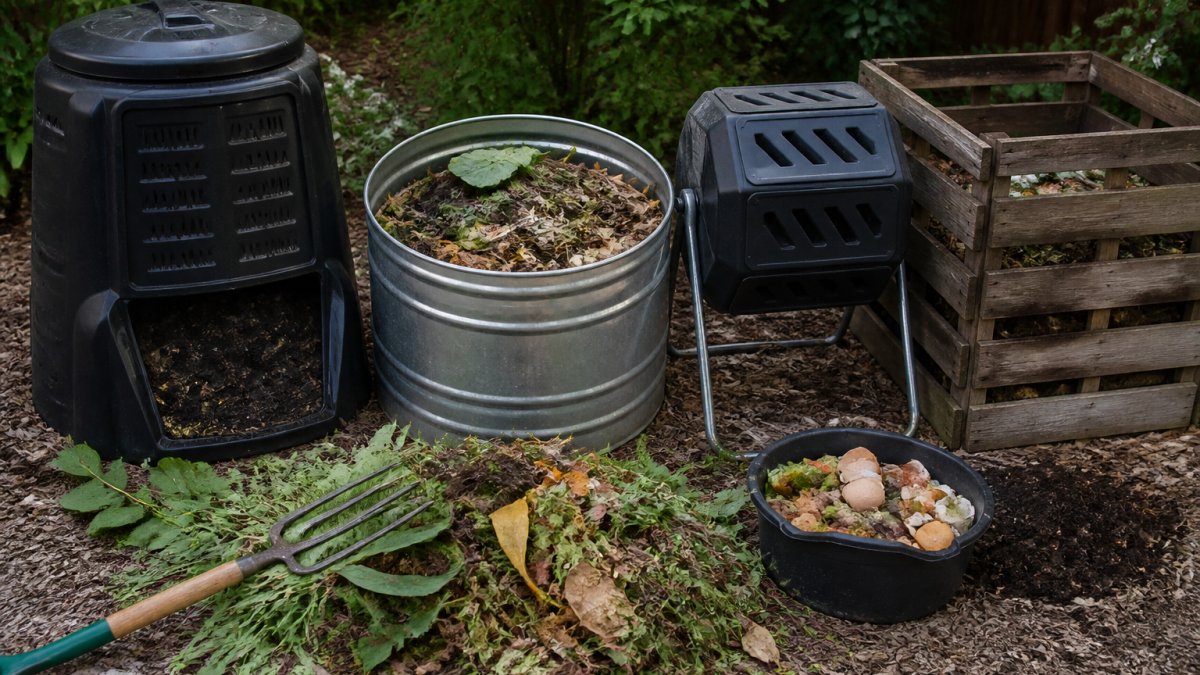
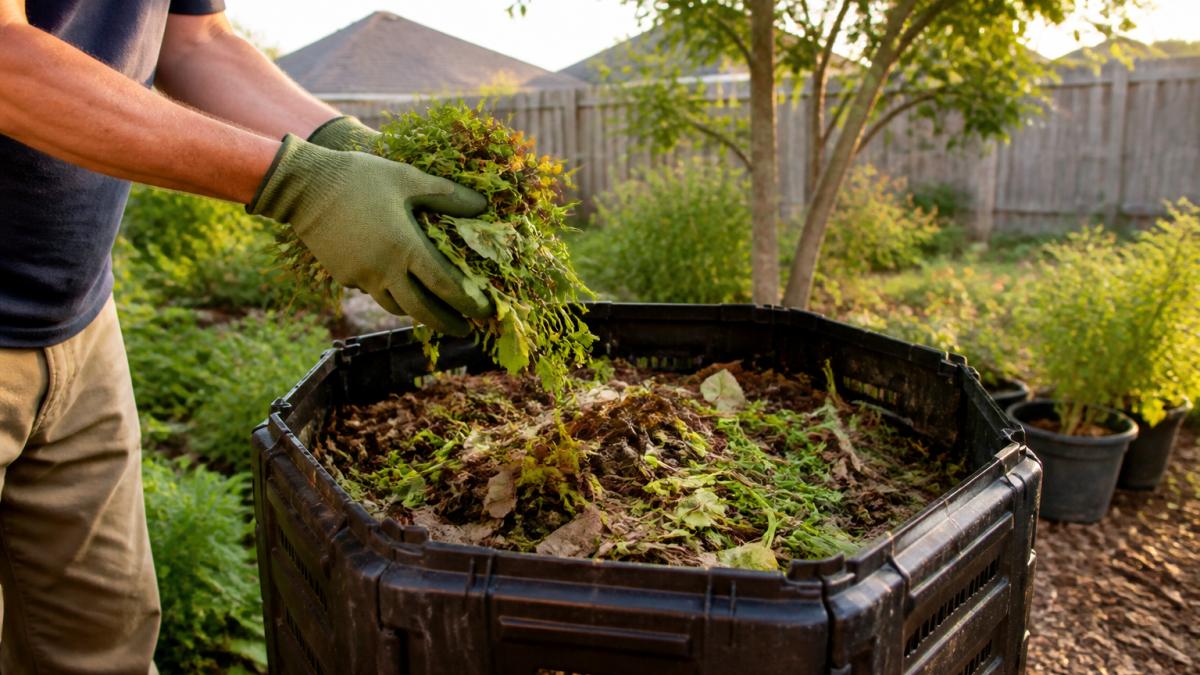
A garden waste compost bin is the simplest starting point: a contained pile that holds heat and moisture while garden trimmings break down. You can buy one or build one from pallets or wire. The bin keeps the pile tidy and speeds up the process.
Here's how to run one:
- Layer greens and browns. Alternate fresh clippings with dry leaves, straw, or shredded cardboard.
- Aim for roughly half and half by volume. Too many greens and the pile turns slimy and smelly.
- Turn it every week or two. A pitchfork or compost aerator does the job in minutes.
- Keep it damp, not soaked. Squeeze a handful; it should feel like a wrung-out sponge.
Method 2: Composting Without a Bin
Composting without a bin works just as well and costs nothing. You build a free-standing pile in a corner of the yard or use a simple wire hoop. The trade-off is less heat and a bit more mess, so it breaks down slower.
Pick a spot with partial shade and good drainage. Pile your materials in layers, keep the center slightly hollowed so water collects, and turn the pile when you think of it. Wire hoops or three wooden pallets tied together keep things neat without a lid.
This method suits larger yards where appearance matters less. It also handles bigger volumes than a typical bin. If you generate a lot of brush and clippings, a binless pile will swallow them without complaint.
A common mistake is piling everything in one spot and walking away. Unturned piles still break down, but they take far longer and may go anaerobic, which is the fancy word for "smells like a swamp."
Method 3: Trench and Pit Composting
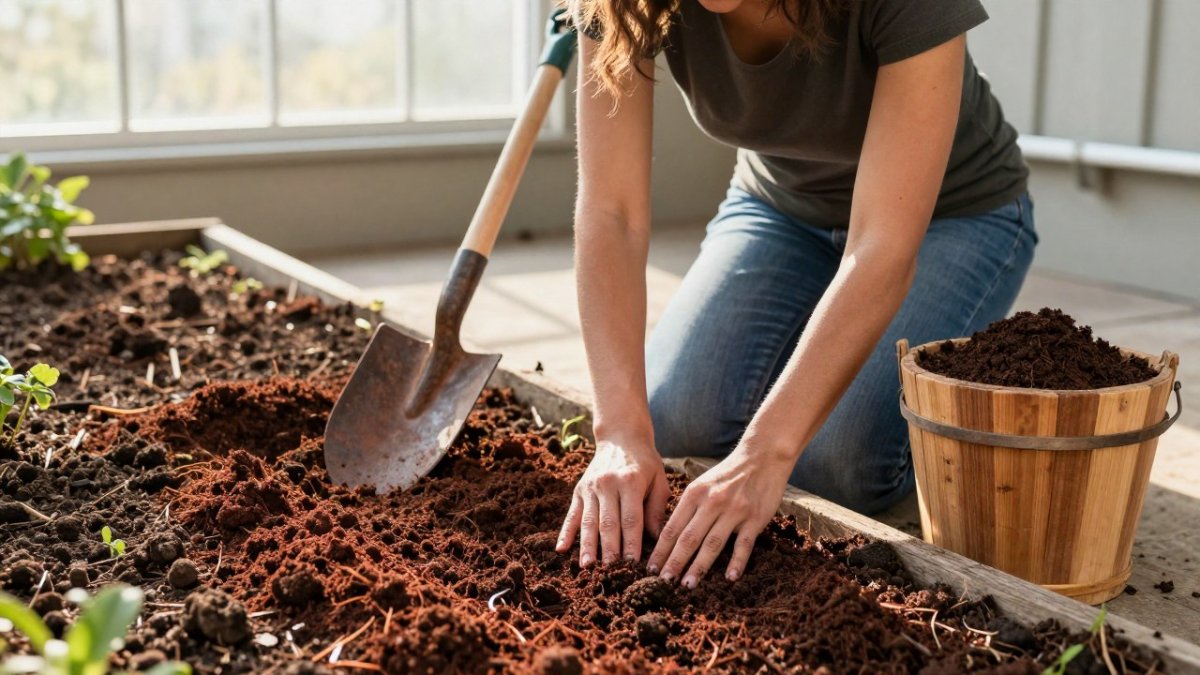
Trench and pit composting buries garden waste directly in the soil, where it breaks down in place. No bin, no turning, no pile to look at. You dig a trench about 30 centimetres deep, add chopped garden waste, cover it with soil, and let the worms do the rest.
This method works well for:
- Vegetable beds between seasons
- Yards with no room for a pile
- Kitchen scraps you don't want sitting above ground
Chop material into smaller pieces first. Whole branches and thick stems take much longer to break down underground. Bury waste at least 30 centimetres deep to keep animals out, and wait a few weeks before planting directly over the spot.
Method 4: Bokashi and Sealed Bucket Composting
Bokashi and sealed bucket composting use a closed container to ferment waste, including things a regular pile can't handle. A bokashi bucket has a tight lid and a drain spout, and you add a bran inoculant with each layer. The result is fermented material, not finished compost, which you then bury or add to a pile.
This method suits small spaces, apartments, and anyone who wants to keep food scraps out of the trash. It handles meat, dairy, and cooked food, which open piles should never take. The catch: you need two buckets so one can rest while the other fills, and you still need somewhere to bury the finished material.
Sealed bucket composting works on the same principle with less equipment. Drill drainage holes, layer waste with browns, and keep the lid on tight. It's slower and less reliable than bokashi, but it costs almost nothing to try.
What to Put in a Compost Bin (and What to Leave Out)
Knowing what to put in a compost bin is the difference between sweet-smelling compost and a smelly mess. The rule of thumb: greens for nitrogen, browns for carbon, and water and air for the microbes doing the work.
| Material | Type | Notes |
|---|---|---|
| Grass clippings | Green | Mix in thin layers, never in a thick mat |
| Dry leaves | Brown | Shred them to speed things up |
| Plant trimmings | Green | Chop thick stems first |
| Straw and hay | Brown | Great for airflow |
| Shredded paper | Brown | Avoid glossy or colored print |
| Coffee grounds | Green | Worms love them |
| Fruit and veg scraps | Green | Bury them in the center |
| Meat, dairy, oils | Skip | Attract animals, cause odors |
| Diseased plants | Skip | May spread problems |
| Pet waste | Skip | Pathogen risk |
| Treated wood | Skip | Chemicals leach into compost |
The balance matters more than the exact recipe. If the pile smells, add browns. If it sits still and does nothing, add greens and a splash of water.
How Long Does Compost Take?
How long does compost take? A hot, well-turned pile can finish in two to three months. A cool pile left alone may take six months to a year. Trench composting takes a few months underground, and bokashi fermentation finishes in about two weeks before you bury it.
Speed depends on four things: particle size, moisture, airflow, and the green-to-brown ratio. Chop material smaller, turn more often, and keep the pile damp, and you'll shave weeks off the timeline.
You'll know it's done when the material is dark, crumbly, and smells like earth. Anything still recognizable goes back for another round.
Conclusion
Composting asks for a little patience and almost no money. Pick the method that fits your space, get the green-brown balance right, and let time do the work. If you're not sure which approach suits your yard, stop by Hoppy Farms Neighborhood Nurseries in Bonham. We carry compost bins, hand tools, and the plants that will thrive in the compost you make. Our team can look at your space and tell you honestly what will work. Get started with Hoppy Farms Neighborhood Nurseries and turn your garden waste into next season's soil.
Frequently Asked Questions
What garden waste can you compost at home?
Most yard and kitchen plant waste works well: grass clippings, dry leaves, dead plant trimmings, straw, shredded paper, coffee grounds, fruit and vegetable scraps, and eggshells. Keep a mix of roughly two parts dry brown material to one part green material so the pile breaks down evenly. Avoid meat, dairy, pet waste, and glossy printed paper. In Bonham's hot summers, turn the pile more often to keep airflow moving and prevent smells.
How do you compost garden waste without a bin?
Composting without a bin means building an open pile or windrow directly on soil. Pick a partly shaded spot with good drainage, loosen the ground beneath it, and layer browns and greens in a heap roughly one metre wide. Turn it with a fork every week or two. Open piles dry out faster in Texas heat, so water occasionally and cover with a tarp during heavy rain. It works well if you have space and don't mind a less tidy look.
How long does compost take to be ready?
Hot, frequently turned piles can finish in two to three months. Cooler, unturned piles typically take six to twelve months. Trench composting underground takes several months before the soil is ready to plant over. Bokashi fermentation takes about two weeks in the bucket, then another few weeks buried in soil. How long compost takes depends on moisture, airflow, particle size, and how often you turn it.
Should a compost pile be in the sun or shade?
A spot with morning sun and afternoon shade suits most home compost piles. Full sun speeds up heating but dries the pile out quickly in a Bonham summer, while full shade keeps it too cool and slow. Aim for a location you can reach with a hose and a wheelbarrow. If your only option is full sun, plan to water and turn more often to keep the pile working.