 blog
Compost vs Soil Amendments for Texas Clay Soil
Last Updated: November 12, 2026
Quick Summary
Compost is the best all-around soil amendment for Texas clay soil because it adds organic matter, loosens clay, and feeds soil microbes. Spread 2 to 4 inches and work it into the top 6 to 8 inches, then reapply lightly each year. Save expanded shale for waterlogged spots and skip sand entirely.
- Spread 2 to 4 inches of compost and work it into the top 6 to 8 inches of soil.
- Fall is the best time to amend because winter gives compost time to settle.
- Expanded shale is a permanent structural fix for low spots that stay waterlogged.
- Never add sand to clay, because it binds the clay into a denser, harder mass.
- Test soil before buying gypsum, which only helps where sodium is high.
Table of Contents
- Why Texas Clay Soil Fights Back
- Compost vs Other Soil Amendments: A Side-by-Side Look
- How Much Compost to Add to Clay Soil
- How to Amend Clay Soil for Drainage
- Expanded Shale for Clay Soil: When It Earns Its Place
- How to Prepare Soil for Planting Vegetables
- Mistakes That Make Dense Clay Worse
- Picking Your Amendments at Hoppy Farms
- Frequently Asked Questions
Why Texas Clay Soil Fights Back
Texas clay soil is dense, sticky, and slow to drain, and it behaves nothing like the loose loam garden books describe. That is the core problem for anyone gardening around Bonham. Our clay holds water and nutrients well, but it packs down hard.
New gardeners often describe the same frustration: "I planted it, I watered it, and it rotted." The soil is usually the reason.
Clay particles are tiny and flat. They stack tightly and squeeze out the air pockets roots need. When clay dries, it shrinks into brick-like clods. When it gets wet, it turns into a sticky mess that clogs every pore.
So before you buy a single bag of anything, understand the goal. You are not replacing your clay. You are loosening it so air, water, and roots can move. The question is which material does that best.
Compost vs Other Soil Amendments: A Side-by-Side Look
Compost is widely regarded as a strong all-around amendment for Texas clay soil. It adds organic matter, feeds soil microorganisms, and improves soil structure over time. Other amendments solve narrower problems.
| Amendment | What It Does | Drawback | Best For | Typical Rate | Incorporation Depth | Timing |
|---|---|---|---|---|---|---|
| Compost | Adds organic matter, loosens clay, feeds microbes | Needs repeat applications | Nearly every bed | 2-4 inches | Top 6-8 inches | Fall preferred; spring okay |
| Expanded shale | Permanently opens tight, compact soil | Costs more, harder to find | Heavy clay, native plant beds, low spots | 2-3 inches | Top 6-8 inches | Anytime soil is workable |
| Gypsum | May help where sodium is high | Does nothing in most Texas clay | Only after a soil test confirms sodicity | Per soil test recommendation | Top 4-6 inches | Before planting |
| Sand | Adds grit | Can turn clay into concrete | Rarely a good idea | Not recommended | , | , |
| Leaf mold | Adds organic matter slowly | Takes months to break down | Free mulch and top-dressing | 2-3 inches as mulch | Surface only | Fall so it breaks down by spring |
How Compost Works in Heavy Clay
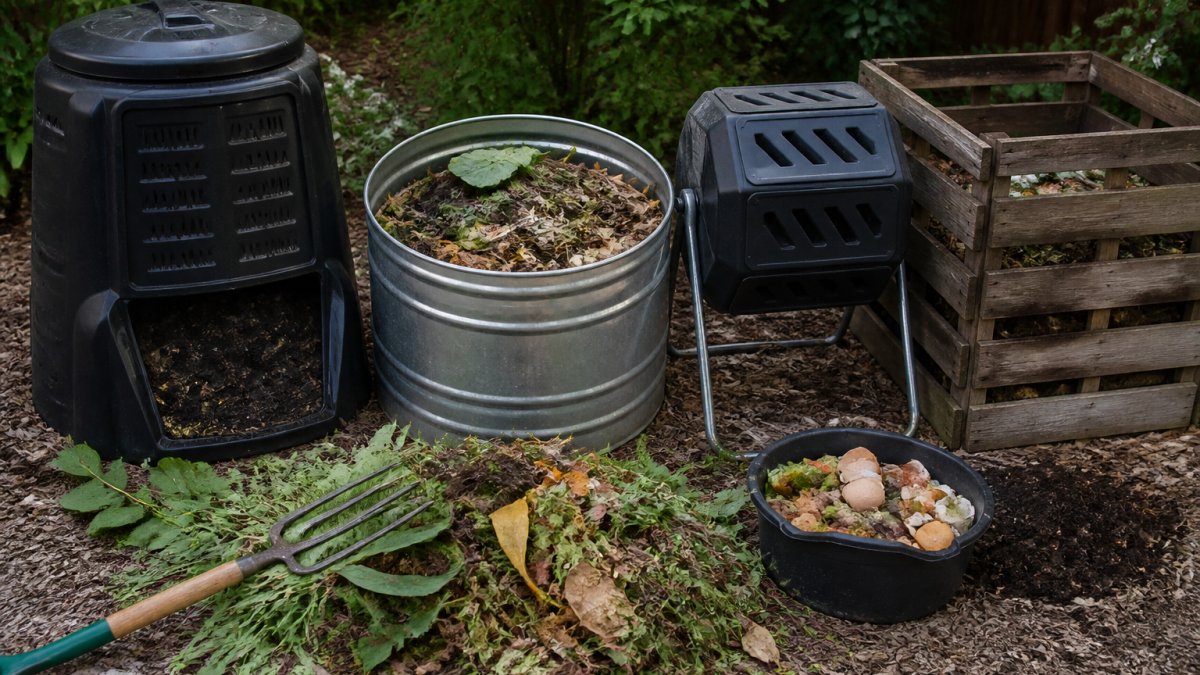
Compost is decomposed organic matter, and it changes clay physically and biologically. Its particles wedge between clay plates and create tiny spaces for air and water. It also feeds the soil microorganisms that glue soil into crumbly, workable aggregates. The effect builds over time. One season of compost helps. Three seasons change the soil. Unlike expanded shale, compost is not a one-time structural fix, it is a recurring input, which is why the annual top-dressing matters as much as the initial incorporation.
Expanded Shale, Gypsum, Sand and Leaf Mold Compared
Expanded shale is heated clay that puffs into lightweight, porous rock. It can keep heavy soil open where drainage is the main problem.
Gypsum is calcium sulfate. It can help where soil is sodic, meaning loaded with sodium. A soil test is the reliable way to know whether gypsum will help.
Sand is the classic mistake. Clay plus sand equals something closer to concrete, not looser soil. The reason is mechanical: sand particles are larger than clay particles, so sand fills the gaps between clay clods and binds them into a denser mass rather than opening pore space.
Leaf mold is simply rotted leaves. It is free, slow, and excellent as mulch or top-dressing.
Matching the Amendment to the Planting Goal
The right amendment depends on what you are growing. Vegetable beds benefit most from 2-4 inches of compost worked into the top 6-8 inches, reapplied lightly each year. Native plant beds often prefer leaner soil, so a lighter 2-inch compost layer plus surface mulch is usually enough, with expanded shale reserved for low spots that stay wet. Lawns can be top-dressed with a quarter to half inch of compost in fall or spring, which feeds the soil without smothering grass. Around trees, keep amendments at the surface as mulch out to the drip line rather than tilling into root zones. Containers need a different mix entirely, a lightweight potting blend rather than native clay amended with compost.
Typical amendment rates for Texas clay soil
How Much Compost to Add to Clay Soil
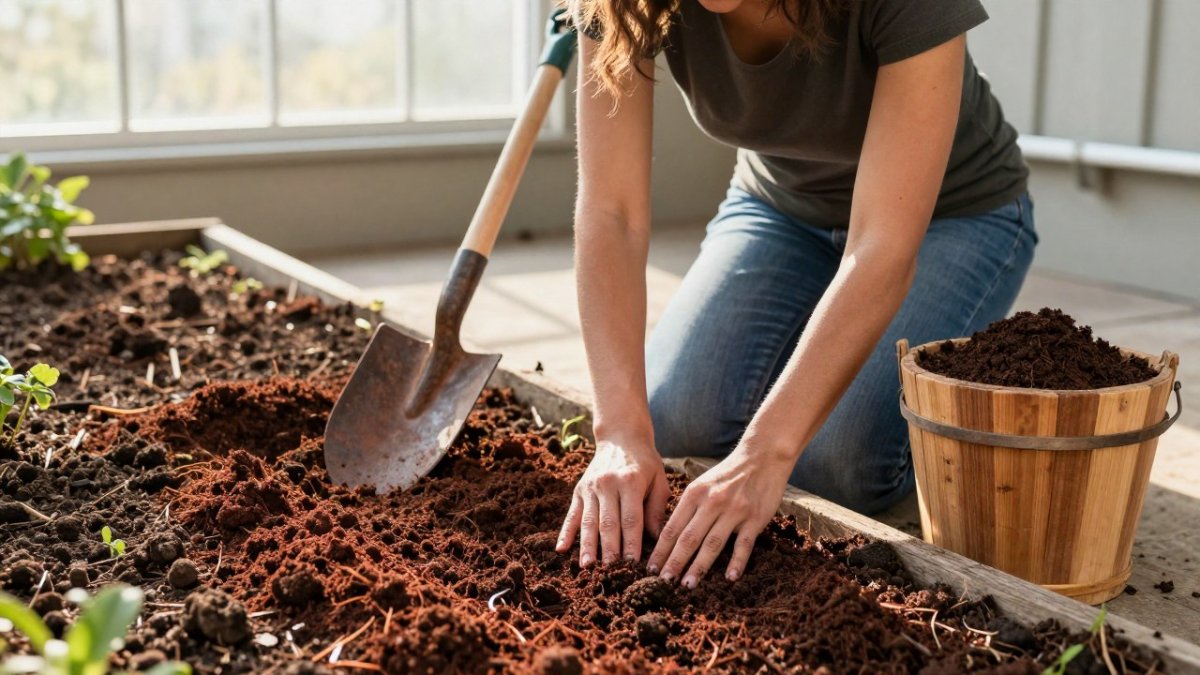
Spread 2 to 4 inches of finished compost over the bed and work it into the top 6 to 8 inches of soil. That rate suits most vegetable and flower beds. For badly compacted ground, use the higher end.
A few practical notes:
- More is not better. Too much compost can make soil salty and waterlogged.
- Use mature compost. Fresh manure burns roots.
- Apply in fall if you can. Winter gives it time to settle in.
- Reapply lightly every year as top-dressing.
For a new native plant bed, till in a lighter 2-inch layer and leave the rest as surface mulch. Native plants often prefer leaner soil.
How to Amend Clay Soil for Drainage
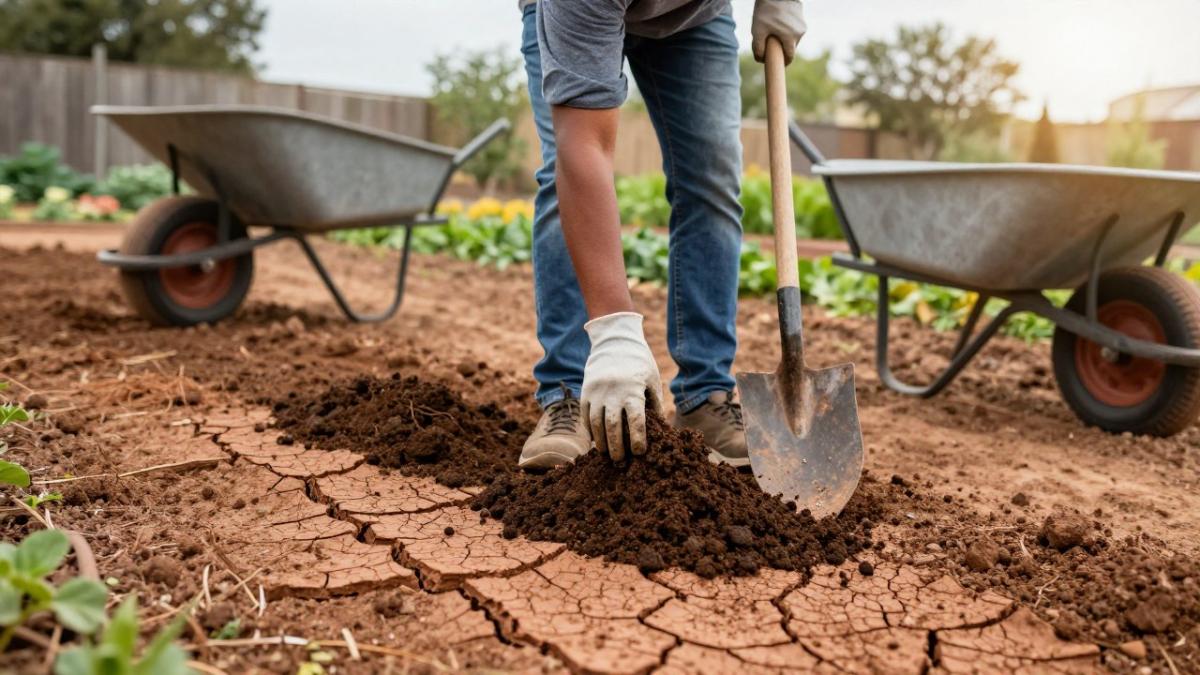
To fix drainage in clay soil, amend deeply rather than just scratching the surface. Water needs a path down, and that path has to be built through the compact layer. But Texas clay is not one material. Blackland Prairie clay in Central Texas, the red clay of North Texas, the sandy-loam-over-clay profiles of East Texas, and the caliche-influenced soils of West Texas drain and respond to amendments differently. Rainfall patterns differ too: East Texas gets enough rain to leach salts and keep organic matter cycling, while West Texas clay may need more careful water management and less frequent, deeper amendments.
Start With a Soil Test, Not a Shopping List
A basic soil test from a county extension office or a reputable lab tells you pH, phosphorus, potassium, calcium, magnesium, and often sodium. Those numbers determine whether gypsum is worth buying, whether lime or sulfur is needed, and how much compost is appropriate. In much of Texas, clay soils run alkaline, which affects nutrient availability; in East Texas, rainfall can push pH lower. Without a test, you are guessing. Bring the results to a nursery or extension agent and ask specifically about sodium levels before considering gypsum.
Step-by-Step Drainage Improvement
- Test the soil first. A basic soil test tells you pH, nutrients, and whether gypsum is even worth buying.
- Break the surface. Loosen the top 6 to 8 inches. Do not pulverize it into dust.
- Spread compost. Lay down 2 to 4 inches across the bed. For badly compacted ground, use the higher end.
- Mix it in. Blend compost into the loosened layer, not just the top inch.
- Add expanded shale where water stands. Work 2-3 inches into the top 6-8 inches of low spots or native beds that stay wet.
- Shape and settle. Rake the bed level and water gently to settle it.
- Mulch on top. Add 2 to 3 inches of mulch to hold moisture and stop crusting.
Watch out: tilling wet clay destroys soil structure and creates hard clods that last for months. Wait until the soil is barely moist, squeeze a handful and it should crumble rather than smear.
Timing and Ongoing Maintenance
Fall is the best time to amend in most of Texas because winter rains and mild temperatures give compost time to settle and microbes time to work before spring planting. In West Texas, where fall can be dry, water the amended bed gently to activate the biology. Reapply compost as a light top-dressing each year, and refresh mulch as it breaks down. Drainage improvement is cumulative: the first season helps, but the soil structure you build over three to five years is what finally turns clay into workable ground.
Expanded Shale for Clay Soil: When It Earns Its Place
Expanded shale is worth the cost when drainage is the main problem and compost alone has not solved it. It is a permanent structural fix, not a nutrient source. Mix it into the top several inches of heavy clay, then top with compost.
Where it makes sense:
- Low spots that stay waterlogged
- Beds planted with natives that hate wet feet
- Small areas where you can afford the extra cost
Where it does not: large vegetable gardens on a budget. Compost does more for less.
How to Prepare Soil for Planting Vegetables
Prepare vegetable beds by amending the whole bed, not just the planting holes. Roots spread wider than most gardeners expect, and a rich hole in poor clay just becomes a bathtub.
A common approach:
- Clear the area of weeds and debris.
- Spread 2 to 4 inches of compost across the full bed.
- Work it into the top 6 to 8 inches.
- Add expanded shale in any spot that holds water.
- Build raised rows or mounds if drainage stays poor.
- Mulch after planting to keep soil cool and moist.
Wait for workable soil. Squeeze a handful. If it smears like paste, give it another day.
Mistakes That Make Dense Clay Worse
The most common mistakes all share one flaw: they fight the clay instead of rebuilding it. Watch for these.
- Adding sand. It binds with clay and hardens.
- Tilling wet soil. It smashes structure into brick-like clods.
- Over-amending. Too much compost causes salt buildup and soggy soil.
- Skipping mulch. Bare clay crusts, sheds water, and bakes in summer.
- Working soil year after year without feeding it. Soil health needs ongoing organic matter, not one big push.
- Adding gypsum blindly. Without a soil test, you may be wasting money.
Picking Your Amendments at Hoppy Farms
Choosing amendments is easier when someone who knows Bonham's soil helps you sort it out. That is what our mother/daughter team does every day. Our nursery offers gardening supplies, and our team is happy to talk through your bed, your drainage, and your plants.
We are also a place to learn about sustainable gardening. Feel free to ask our team questions about your garden.
Stop by, and let's talk about your clay soil.
Texas clay will test your patience, but it rewards good prep. Start with compost, test before you try gypsum, and add expanded shale only where drainage truly fails. At Hoppy Farms Neighborhood Nurseries, we offer gardening supplies and a welcoming, personalized atmosphere for new gardeners. Come see us for locally focused advice and a welcoming place to learn. Visit Hoppy Farms Neighborhood Nurseries to get started on your garden.
Frequently Asked Questions
What is the best amendment for Texas clay soil?
Compost is the workhorse. It adds organic matter that binds clay particles into crumbly aggregates, which improves both drainage and water retention. Expanded shale helps in heavy, compacted spots, and mulch on top protects the surface. Gypsum only helps if a soil test shows excess sodium.
Can I just put compost on top of clay soil without mixing it in?
You can, and it works as a slow top-dressing or sheet mulch. Earthworms and soil microorganisms gradually pull the organic matter down. The catch is speed: clay underneath stays hard and waterlogged for longer. For a new vegetable bed, work compost into the top 15 to 20 centimetres. For established beds, a 5 to 8 centimetre layer on top each season is enough.
Will adding sand or gravel make clay soil drain better?
Usually no. Mixing sand into heavy clay creates something closer to concrete, because the fine clay particles fill the gaps between sand grains. Gravel does the same on a smaller scale. If drainage is the goal, use organic matter and expanded shale instead, and avoid walking on wet beds, which causes compaction. A soil test will tell you whether drainage problems come from texture or from compaction.
How often should I add organic matter to clay soil?
Plan on adding compost or leaf mold every growing season, either worked in before planting or laid on top as mulch. Clay soil burns through organic matter faster in Texas heat, so yearly top-dressing keeps soil structure improving.